

Choosing the right material for kitchen countertops is one of the most important decisions you'll make during a kitchen renovation. In India, where kitchens are increasingly becoming the heart of modern homes, this choice carries both aesthetic and functional significance. Two popular options that homeowners and architects frequently debate are natural stone and engineered stone. Each has distinct advantages and limitations, and understanding these differences will help you make an informed decision that suits your lifestyle, budget, and design preferences.
Understanding Natural Stone Countertops
Natural stone countertops are sourced directly from quarries and include materials like granite, marble, limestone, and slate. These materials have been used in construction and interior design for centuries, and their popularity in Indian kitchens continues to grow, particularly in metropolitan areas like Mumbai, Delhi, Bangalore, and Pune.
Build cost · Bengaluru, May 2026
Types of Natural Stone Available in India
Granite is the most popular natural stone choice for Indian kitchens. It's an igneous rock formed from cooled magma, making it extremely hard and durable. India is actually one of the world's leading granite producers, with major quarries in Karnataka, Rajasthan, and Tamil Nadu. This proximity means granite countertops are relatively affordable compared to imported options.
Marble offers a luxurious, elegant appearance with distinctive veining patterns. However, it's softer than granite and more prone to staining and etching. Despite these drawbacks, many homeowners choose marble for its aesthetic appeal, particularly in formal dining areas or for those who don't use their kitchens intensively.
Limestone and slate are less common in Indian kitchens but offer unique textures and earthy tones. These materials are softer and more porous than granite, requiring more maintenance.
Advantages of Natural Stone
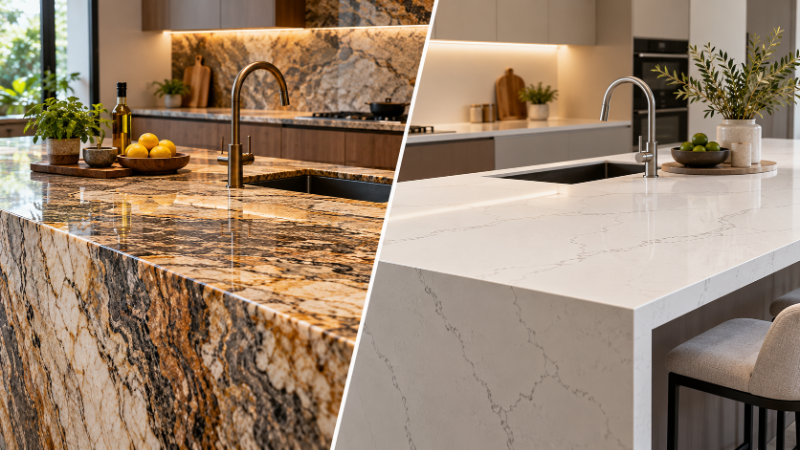
Natural stone countertops offer several compelling benefits. First, their aesthetic appeal is unmatched—each slab is unique with natural variations in color and pattern. This uniqueness means your kitchen will have a one-of-a-kind appearance that can't be replicated.
Durability is another significant advantage. Granite, in particular, is one of the hardest materials available for countertops. It resists scratches, heat, and wear exceptionally well. A properly sealed granite countertop can last 20-30 years or even longer with appropriate care.
Natural stone also adds significant value to your home. Many potential buyers view natural stone countertops as a premium feature, which can positively impact your property's resale value.
Additionally, natural stone is heat-resistant, making it ideal for kitchens where you frequently place hot pots and pans directly on the surface without trivets.
Disadvantages of Natural Stone
Despite their advantages, natural stone countertops come with notable drawbacks. Porosity is a major concern—granite and marble are porous materials that can absorb liquids, leading to staining and potential bacterial growth if not properly sealed. This requires regular sealing, typically every 1-3 years depending on the stone type and usage.
Maintenance demands are substantial. Natural stone requires careful handling of acidic substances like lemon juice, vinegar, and wine, which can etch the surface, particularly marble. Spills must be cleaned promptly to prevent staining.
Cost is another consideration. While Indian granite is relatively affordable, premium granite slabs and marble can be expensive. Installation costs are also higher due to the weight of the material and the expertise required. In major Indian cities, natural stone countertop installation typically ranges from ₹2,500 to ₹5,000 per square foot, depending on the stone type and complexity of installation.
Natural stone is also susceptible to cracking if subjected to extreme temperature changes or if the underlying cabinet structure isn't adequately supported.
Frequently asked
Understanding Engineered Stone Countertops
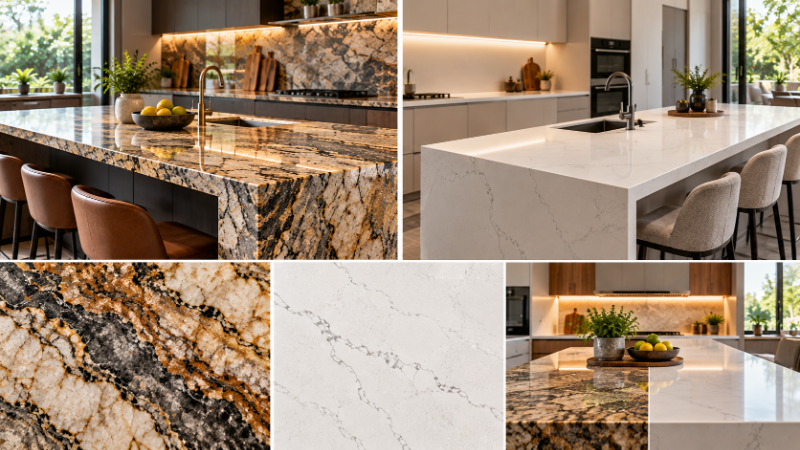
Engineered stone, also known as quartz countertops, is a manufactured material composed of crushed natural stone (typically 93-97%) combined with resins and pigments. Brands like Silestone, Caesarstone, and Indian manufacturers have made these countertops increasingly popular in modern Indian kitchens.
How Engineered Stone Is Made
The manufacturing process involves mixing crushed granite, marble, or other stone fragments with polyester or epoxy resin binders. This mixture is then vibrated, compressed, and cured in a kiln. The result is a non-porous, uniform material that combines the aesthetic appeal of natural stone with enhanced durability and consistency.
Advantages of Engineered Stone
Engineered stone offers superior non-porous properties compared to natural stone. Because it's manufactured with resin binders, it doesn't require sealing and resists staining exceptionally well. This makes it ideal for busy Indian households where spills are inevitable.
Consistency is another major advantage. Unlike natural stone, where each slab varies, engineered stone provides uniform color and pattern throughout. This is beneficial if you need to match countertops across multiple areas or if you prefer a more predictable aesthetic.
Durability is excellent. Engineered stone is non-porous, making it resistant to bacteria, mold, and mildew—important considerations in India's humid climate, particularly in coastal cities like Mumbai and Kochi. It's also highly resistant to scratches, stains, and heat (though extreme direct heat should still be avoided).
Maintenance is minimal. A simple wipe-down with soap and water is usually sufficient. No sealing is required, saving you time and money over the years.
Cost-wise, engineered stone typically ranges from ₹2,000 to ₹4,000 per square foot in India, making it competitive with natural stone and often more affordable than premium granite or marble.
Disadvantages of Engineered Stone
The primary disadvantage is lack of uniqueness. Because engineered stone is manufactured, it lacks the natural variation and character of natural stone. Some homeowners find this uniformity less aesthetically appealing.
Heat resistance, while good, isn't as exceptional as natural stone. Direct contact with extremely hot cookware can potentially damage the resin binders. Using trivets and hot pads is recommended, though this is good practice regardless of countertop material.
Engineered stone can be prone to chipping if subjected to significant impact, though this is relatively rare with quality products. Repairs often require professional intervention and can be costly.
Environmental considerations are worth noting. While engineered stone uses natural stone components, the manufacturing process involves chemical resins, which may concern environmentally conscious homeowners.
Durability Comparison
When comparing durability, both materials excel in different ways. Natural stone, particularly granite, offers superior heat resistance and scratch resistance. It can withstand decades of use with minimal visible wear when properly maintained. However, its porous nature makes it vulnerable to staining and requires consistent sealing.
Engineered stone provides superior resistance to staining, bacteria, and moisture. Its non-porous nature means it won't absorb liquids or harbor bacteria in microscopic pores. However, it's slightly more vulnerable to chipping and heat damage from direct contact with extremely hot surfaces.
For Indian kitchens, particularly those in humid climates, engineered stone's resistance to moisture and mold growth offers practical advantages. However, if you prioritize heat resistance and don't mind regular maintenance, natural stone remains an excellent choice.
Aesthetic Considerations for Indian Kitchens
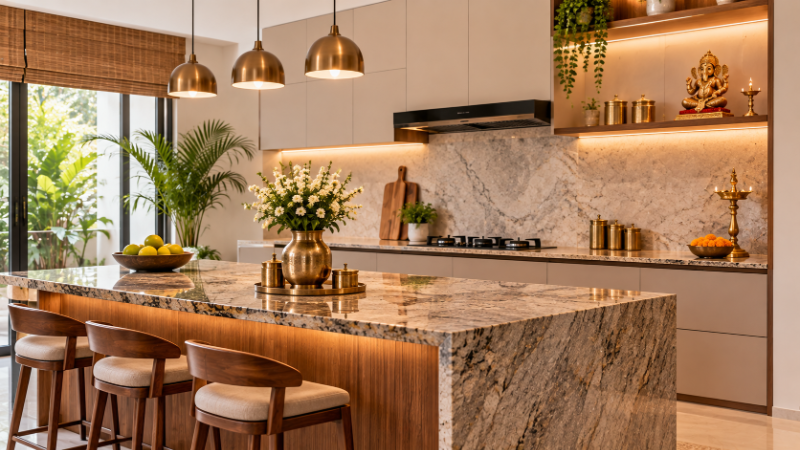
Natural stone's aesthetic appeal is undeniable. The rich veining of marble, the speckled patterns of granite, and the earthy tones of slate create visually stunning countertops that serve as focal points in kitchen design. For homeowners who appreciate natural variation and unique patterns, natural stone is the clear winner.
Engineered stone has evolved significantly. Modern engineered stone options include designs that convincingly mimic natural stone while offering superior functionality. Many Indian homeowners appreciate the clean, consistent look of engineered stone, which complements contemporary kitchen designs popular in urban areas like Delhi, Bangalore, and Pune.
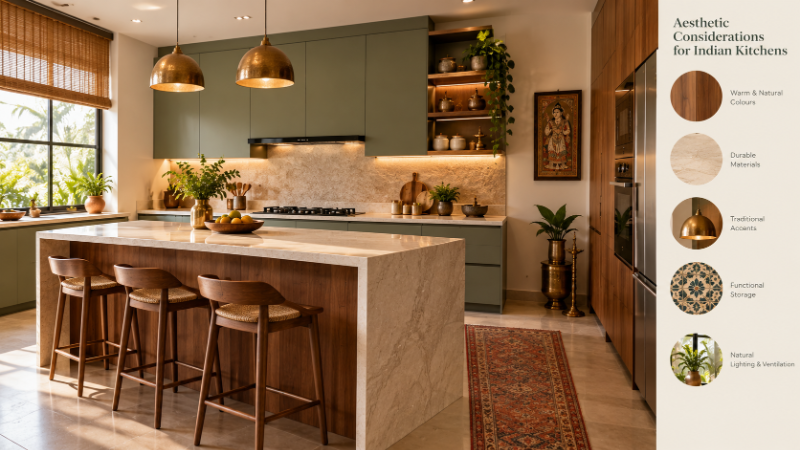
Consider your kitchen's overall design aesthetic. Traditional or transitional kitchens often benefit from natural stone's organic character, while modern kitchens may be better suited to engineered stone's uniformity and sleek appearance.
Maintenance Requirements
Natural stone maintenance involves regular sealing (every 1-3 years), prompt spill cleanup, and careful handling of acidic substances. You'll need to invest in appropriate cleaning products designed for natural stone. In India's climate, particularly during monsoon seasons in cities like Mumbai and Chennai, maintaining proper sealing is crucial to prevent moisture absorption and staining.
Engineered stone requires minimal maintenance. Daily cleaning with mild soap and water is sufficient. No sealing is necessary, and the material resists most common kitchen stains. This low-maintenance nature appeals to busy professionals and families with young children.
Cost Analysis for Indian Homeowners
Initial costs vary. Natural granite in India typically costs ₹2,000-₹4,000 per square foot, with installation adding another ₹500-₹1,500 per square foot. Premium marble can exceed ₹5,000 per square foot before installation. Engineered stone generally ranges from ₹2,000-₹4,000 per square foot with similar installation costs.
Long-term costs favor engineered stone. Natural stone's ongoing sealing requirements (₹5,000-₹15,000 every 2-3 years for an average kitchen) add up over time. Engineered stone has virtually no maintenance costs beyond regular cleaning.
If durability is measured over 20-30 years, engineered stone often proves more economical for average Indian households, while natural stone offers better value for those willing to invest in proper maintenance.
Climate Considerations for India
India's diverse climate significantly impacts countertop performance. In humid coastal regions like Mumbai, Kochi, and Goa, engineered stone's non-porous nature provides advantages by preventing moisture absorption and mold growth. In dry regions like Jaipur and Ahmedabad, both materials perform well, though natural stone's heat resistance is beneficial in kitchens with intense heat from traditional cooking methods.
During monsoon seasons, engineered stone requires less maintenance, while natural stone demands vigilant sealing to prevent water absorption.
Making Your Decision
Choose natural stone if you prioritize aesthetic uniqueness, exceptional heat resistance, and don't mind regular maintenance. It's ideal if you use your kitchen moderately and appreciate the luxury and character of natural materials.
Choose engineered stone if you value low maintenance, superior stain resistance, and consistency. It's perfect for busy households, families with young children, and kitchens in humid climates.
Consider your lifestyle, budget, climate, and design preferences. If you're uncertain, consult with kitchen designers and architects who understand Indian market options and can recommend materials suited to your specific situation.
Finding Professional Guidance
The decision between natural and engineered stone shouldn't be made in isolation. Professional architects, interior designers, and contractors can provide valuable insights based on your specific kitchen layout, usage patterns, and local climate conditions. When selecting materials for your kitchen renovation, it's essential to work with experienced professionals who understand both options thoroughly.
Platforms like AECORD connect homeowners with vetted architects, designers, and contractors who specialize in kitchen renovations across Indian cities. These professionals can guide you through material selection, ensuring your choice aligns with your home's architecture, your lifestyle needs, and your budget. Whether you're renovating a kitchen in Mumbai, Delhi, Bangalore, or any other Indian city, AECORD makes it easy to find qualified professionals who can help you navigate this important decision.
Visit AECORD today to connect with kitchen specialists in your area who can provide personalized recommendations based on your specific requirements and help bring your dream kitchen to life.
Frequently Asked Questions
What is the difference between natural stone and engineered stone countertops?
Natural stone countertops are sourced directly from quarries (granite, marble, limestone, slate) and are entirely natural materials, while engineered stone is manufactured from crushed stone combined with resins and pigments. Natural stone offers unique patterns and superior heat resistance, but requires more maintenance and sealing, whereas engineered stone is more uniform, non-porous, and easier to maintain.
How long do natural stone countertops last?
A properly sealed natural stone countertop, particularly granite, can last 20-30 years or even longer with appropriate care and maintenance. The lifespan depends on the stone type, quality of sealing, and how well you maintain it by cleaning spills promptly and avoiding acidic substances.
Why does natural stone need to be sealed?
Natural stone like granite and marble is porous and can absorb liquids, leading to staining and potential bacterial growth if left unsealed. Regular sealing, typically every 1-3 years depending on usage, creates a protective barrier that prevents liquids from penetrating the stone surface.
Is natural stone or engineered stone better for kitchens in India?
Natural stone, particularly Indian granite from Karnataka and Tamil Nadu, offers excellent durability and value for money due to local availability. However, engineered stone may be better if you prefer low maintenance and consistent appearance, as it doesn't require sealing and is more resistant to staining and etching from acidic substances.
How much does natural stone countertop installation cost in India?
Natural stone countertop installation in major Indian cities typically ranges from ₹2,500 to ₹5,000 per square foot, depending on the stone type, quality of the slab, and complexity of installation. Local granite is more affordable than imported stones or premium marble optiom