

The kitchen is often considered the heart of a home, and in Indian tradition, it holds significant spiritual importance. Kitchen Vastu, rooted in ancient Indian architectural science, provides guidelines for designing and organizing your kitchen space to promote health, prosperity, and positive energy. Whether you're building a new home in Bangalore, renovating your kitchen in Mumbai, or simply rearranging your cooking space in Delhi, understanding Vastu principles can make a meaningful difference in your daily life and family well-being.
Understanding Kitchen Vastu: The Basics
Build cost · Bengaluru, May 2026
Understanding Kitchen Vastu: Key Principles
Kitchen Vastu is based on the traditional Indian architectural system known as Vastu Shastra, which focuses on creating balanced and harmonious living environments. For centuries, these principles have been used to guide the design of homes by aligning spaces with natural energies and directional influences.
The kitchen holds special importance in Vastu because it is the area where food is prepared, directly contributing to the health and well-being of the household. According to Vastu principles, the arrangement of the kitchen should support a positive flow of energy while maintaining a balance between the five fundamental elements—earth, water, fire, air, and space.
Among these elements, fire plays the most significant role in the kitchen, making the placement of cooking appliances, stoves, and related functions particularly important. Proper positioning of these elements is believed to promote harmony, efficiency, and overall prosperity within the home.
Whether you're building a new kitchen or upgrading an existing one, combining traditional Vastu guidelines with modern design practices can help create a functional and balanced space. AECORD connects homeowners with experienced architects and interior designers who can incorporate Vastu principles into practical, contemporary kitchen designs tailored to your needs..
Kitchen Direction According to Vastu
The Ideal Kitchen Direction
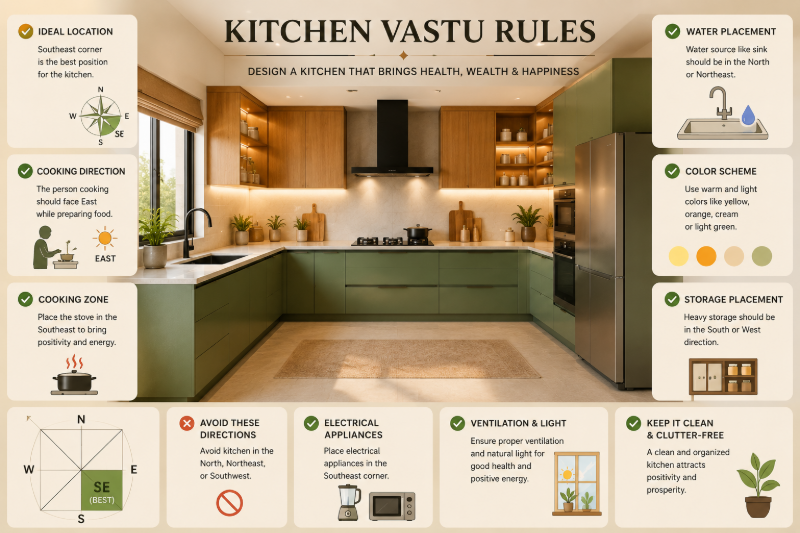
According to Vastu principles, the southeast corner of your home is the most auspicious location for the kitchen. The southeast direction is associated with the fire element, making it naturally aligned with cooking activities. If your kitchen is in the southeast, you're following the most traditional and recommended Vastu guideline.
The southeast direction is believed to bring prosperity, good health, and positive energy to the household. It also promotes better digestion and reduces health-related issues among family members. In cities like Pune and Hyderabad, where many modern apartments are being constructed, architects increasingly incorporate this principle into their designs.
Frequently asked
Alternative Directions
Not every home can have a kitchen in the southeast corner due to architectural constraints or existing layouts. In such cases, Vastu offers alternatives:
East Direction: The second-best option for kitchen placement. It brings positive energy and is associated with the sun, symbolizing new beginnings and vitality.
North Direction: While not ideal, a north-facing kitchen can work if other Vastu principles are properly followed. It's associated with prosperity and business growth.
Avoid Southwest: The southwest corner should be avoided for kitchen placement as it's considered inauspicious and may lead to financial difficulties.
Avoid Northeast: The northeast is sacred in Vastu and should be reserved for prayer rooms or meditation spaces, not kitchens.
Stove and Cooking Appliances Placement
The Sacred Position of the Stove
The stove or cooking range is the most important element in the kitchen from a Vastu perspective. It represents the fire element and should be positioned carefully to harness positive energy.
Ideal Stove Placement:
Place the stove in the southeast corner of the kitchen, aligning it with the fire element.
The person cooking should face east while preparing food, allowing them to absorb positive solar energy.
Ensure the stove is not directly in front of the kitchen door, as this can cause energy dissipation.
Keep at least 2-3 feet distance between the stove and the kitchen sink to avoid conflict between fire and water elements.
The stove should never be placed under a window or beam, as this creates negative energy.
When renovating your kitchen in cities like Chennai, Kolkata, or Ahmedabad, work with designers from AECORD who understand these nuances and can suggest practical solutions that maintain both Vastu principles and modern functionality.
Other Cooking Appliances
Modern kitchens include various appliances beyond the traditional stove. Here's how to position them according to Vastu:
Microwave Oven: Place in the southeast or south direction of the kitchen.
Refrigerator: Position in the southwest, south, or west direction. Never place it in the northeast or directly opposite the stove.
Dishwasher: Keep in the northwest or west part of the kitchen.
Exhaust Fan: Install in the south or southeast to facilitate proper air circulation and energy flow.
Water Elements and Sink Placement
Sink and Water Source Positioning
Water is one of the five elements and must be positioned thoughtfully in the kitchen. The sink, being the primary water element, requires careful placement.
Ideal Sink Placement:
Position the sink in the northeast corner of the kitchen, as water is associated with purity and the northeast with spirituality.
If northeast isn't possible, place it in the north or east direction.
The sink should never be in the southeast (fire direction) or southwest (inauspicious direction).
Ensure the sink is at least 2-3 feet away from the stove to maintain the balance between fire and water elements.
Keep the sink clean and in good working condition, as a leaking or broken sink is considered inauspicious.
In metropolitan areas like Bangalore and Hyderabad, where space is often limited, finding the perfect spot for both stove and sink requires creative planning. Professional architects available on AECORD can help you optimize your kitchen layout within space constraints while respecting Vastu principles.
Kitchen Colors and Materials
Auspicious Colors
Color plays a significant role in Vastu and affects the energy within your kitchen. Here are the recommended colors:
White: Represents purity and cleanliness. It's an excellent choice for kitchen walls and is practical for maintenance.
Yellow: Associated with prosperity and positivity. It's warm and welcoming, making the kitchen feel inviting.
Green: Symbolizes growth and freshness. It's calming and promotes healthy eating habits.
Orange: Brings energy and enthusiasm to the cooking space. Use it as an accent color for balance.
Light Blue: Promotes calmness and is considered auspicious in Vastu.
Colors to Avoid
Certain colors can create negative energy in the kitchen:
Black: Absorbs light and positive energy. Avoid using it as a primary color in the kitchen.
Dark Red: Can increase aggression and stress. Use only in very small quantities if at all.
Dark Gray: Creates a heavy, oppressive atmosphere.
Flooring and Materials
The materials you choose for your kitchen floor and countertops also matter according to Vastu:
Marble or Granite: Excellent choices that represent earth element and durability. Granite countertops, popular in Indian kitchens, cost between ₹300-₹800 per square foot depending on quality and location.
Ceramic Tiles: Affordable and practical, costing ₹50-₹300 per square foot. They're easy to clean and maintain.
Wood: Can be used for cabinets and shelving. It represents the wood element and brings warmth to the space.
Stainless Steel: Modern and hygienic, suitable for countertops and appliances.
Kitchen Layout and Design Principles
The Work Triangle
Vastu principles align well with modern kitchen ergonomics. The work triangle—connecting the sink, stove, and refrigerator—should be efficient and balanced. According to Vastu, this arrangement should also respect the directional guidelines for each element.
Storage and Shelving
Proper Storage Placement:
Store heavy items in the south and west directions of the kitchen.
Keep lightweight items in the north and east.
Avoid cluttering the northeast corner, which should remain relatively open for positive energy flow.
Install shelves at appropriate heights—never too high or too low—to maintain balance and accessibility.
Keep the kitchen organized and clutter-free. Disorganization creates stagnant energy.
Ventilation and Windows
Proper ventilation is crucial both from a practical and Vastu perspective:
Ensure windows are in the east or north direction to allow morning sunlight and fresh air.
Install proper exhaust fans to remove cooking fumes and maintain air quality.
Good ventilation prevents the accumulation of negative energy and keeps the space fresh and vibrant.
Lighting in the Kitchen
Natural and Artificial Light
Light is essential for both functionality and energy flow:
Natural Light: Maximize natural light by positioning windows in the east or north. This brings positive solar energy into the space.
Artificial Lighting: Use bright, white LED lights that mimic natural daylight. Avoid dim or yellow-tinted lights that create a dull atmosphere.
Task Lighting: Install focused lights above the stove and sink for safety and functionality.
Avoid Shadows: Ensure the cooking area is well-lit to prevent accidents and maintain positive energy.
Kitchen Entrance and Doors
Door Placement
The kitchen entrance should be positioned thoughtfully:
The main kitchen door should ideally be in the east or north direction.
Avoid placing the door in the southwest, as it's considered inauspicious.
The door should open inward into the kitchen, not outward.
Ensure the kitchen door is not directly aligned with the main entrance of the home, as this allows positive energy to escape.
Kitchen Vastu Tips for Modern Apartments
In cities like Delhi, Mumbai, and Bangalore, many people live in apartments with fixed layouts that may not perfectly align with traditional Vastu principles. Here are practical solutions:
Use Mirrors Strategically: Mirrors can redirect energy and make spaces appear larger. Place them on the east or north walls to amplify positive energy.
Color Compensation: If your kitchen faces an unfavorable direction, use auspicious colors to balance the energy.
Decorative Elements: Use paintings, plants, and decorative items that represent positive symbols and elements.
Plants: Keep fresh plants in the kitchen, especially in the east or north corner. They purify air and bring living energy.
Crystals and Symbols: Place Vastu symbols or crystals that resonate with the fire element in the southeast corner.
When working within apartment constraints, experienced designers from AECORD can suggest creative modifications that respect both your space limitations and Vastu principles.
Common Kitchen Vastu Mistakes to Avoid
Placing the stove directly under a window: This dissipates the fire element's energy.
Having an open kitchen facing the main entrance: This allows positive energy to escape directly.
Keeping the kitchen dirty or cluttered: Negative energy accumulates in disorganized spaces.
Using the kitchen as a storage area: The kitchen should be reserved for its primary purpose.
Having a broken stove or leaking sink: Repair immediately to maintain positive energy flow.
Placing the refrigerator opposite the stove: This creates conflict between water and fire elements.
Ignoring ventilation: Poor air circulation traps negative energy.
Implementing Kitchen Vastu in Your Home
Step-by-Step Implementation
If you're planning to redesign your kitchen according to Vastu principles, follow these steps:
Assess Your Current Layout: Evaluate your kitchen's current direction and appliance placement.
Identify Conflicts: Note which elements are not aligned with Vastu principles.
Plan Changes: Prioritize changes based on feasibility and budget. Major appliance relocation might require plumbing and electrical work.
Consult Professionals: Work with architects and designers who understand Vastu. You can find specialists on AECORD who can provide customized solutions for your kitchen.
Make Gradual Changes: You don't need to overhaul everything at once. Implement changes gradually based on priority and budget.
Maintain the Space: Keep your kitchen clean, organized, and well-maintained to sustain positive energy.
Budget Considerations
Kitchen renovation costs in India vary widely based on location and scope:
Basic Renovation: ₹2-5 lakhs for cosmetic changes, repainting, and minor adjustments.
Moderate Renovation: ₹5-15 lakhs for new cabinets, countertops, and appliance repositioning.
Complete Overhaul: ₹15 lakhs and above for structural changes, plumbing, and electrical work.
Costs vary significantly between metros like Mumbai and Bangalore versus tier-2 cities. Getting multiple quotes from professionals on AECORD can help you find the best value for your budget.
Conclusion
Kitchen Vastu offers timeless principles that, when thoughtfully implemented, can create a harmonious, energetically positive space where your family thrives. Whether you're building a new home or renovating an existing kitchen, understanding these guidelines helps you make informed design decisions that align with both traditional wisdom and modern functionality.
The key is to balance Vastu principles with practical considerations like space constraints, budget, and modern lifestyle needs. While strict adherence to every rule may not be possible in contemporary apartments, focusing on the most important elements—particularly the stove placement and maintaining cleanliness and organization—can significantly enhance the positive energy in your kitchen.
Ready to transform your kitchen according to Vastu principles? Connect with experienced architects and interior designers on AECORD who specialize in Vastu-compliant designs. Whether you're in Bangalore, Mumbai, Delhi, or any other Indian city, you'll find professionals who can help you create a kitchen that's both beautiful and spiritually aligned. Browse our directory today and find the right expert for your kitchen renovation project.
Frequently Asked Questions
What is the best direction for a kitchen according to Vastu principles?
According to Vastu Shastra, the southeast corner of your home is the most auspicious location for a kitchen, as it aligns with the fire element essential for cooking. If southeast isn't possible, the east direction is the second-best option, while southwest and northeast directions should be avoided.
Which direction should you face while cooking according to Vastu?
The person cooking should face east while preparing food to absorb positive solar energy and maintain alignment with Vastu principles. This orientation is believed to promote better health and positive energy in the kitchen.
Why is the stove placement important in Kitchen Vastu?
The stove represents the fire element in Kitchen Vastu and is the most important kitchen element from a spiritual perspective. Proper stove placement in the southeast corner is believed to bring prosperity, good health, and positive energy to the household.
Can you have a kitchen in the northeast or southwest direction?
No, both northeast and southwest directions should be avoided for kitchens. The northeast is considered sacred and should be reserved for prayer or meditation spaces, while southwest is believed to be inauspicious and may lead to financial difficulties.
What are the five elements in Kitchen Vastu and why are they important?
The five elements in Kitchen Vastu are earth, water, fire, air, and space. Fire is particularly significant in the kitchen since cooking involves heat and flame, and proper alignment of all elements according to natural energy patterns promotes harmony, health, and prosperity in the home.
Frequently Asked Questions
What is the best direction for a kitchen according to Vastu principles?
According to Vastu Shastra, the southeast corner of your home is the most auspicious location for a kitchen, as it aligns with the fire element essential for cooking. If southeast isn't possible, the east direction is the second-best option, while southwest and northeast directions should be avoided.
Which direction should you face while cooking according to Vastu?
The person cooking should face east while preparing food to absorb positive solar energy and maintain alignment with Vastu principles. This orientation is believed to promote better health and positive energy in the kitchen.
Why is the stove placement important in Kitchen Vastu?
The stove represents the fire element in Kitchen Vastu and is the most important kitchen element from a spiritual perspective. Proper stove placement in the southeast corner is believed to bring prosperity, good health, and positive energy to the household.
Can you have a kitchen in the northeast or southwest direction?
No, both northeast and southwest directions should be avoided for kitchens. The northeast is considered sacred and should be reserved for prayer or meditation spaces, while southwest is believed to be inauspicious and may lead to financial difficulties.
What are the five elements in Kitchen Vastu and why are they important?
The five elements in Kitchen Vastu are earth, water, fire, air, and space. Fire is particularly significant in the kitchen since cooking involves heat and flame, and proper alignment of all elements according to natural energy patterns promotes harmony, health, and prosperity in the home.