Integrated Solar Roofing Solutions India | BIPV Tiles
Discover curved solar roof tiles and BIPV solutions for Indian architecture. Aesthetic, energy-efficient solar roofing seamlessly integrated into modern designs
Discover curved solar roof tiles and BIPV solutions for Indian architecture. Aesthetic, energy-efficient solar roofing seamlessly integrated into modern designs
Understanding Solar Roof Tiles:
The Future of Sustainable Architecture in India
Solar roof tiles are transforming the way buildings generate energy in India. Unlike conventional rooftop panels that sit above the roof surface, solar roof tiles integrate directly into the architecture, combining clean energy generation with seamless design. As sustainability becomes central to modern construction, architects, developers, and homeowners are increasingly turning to Building-Integrated Photovoltaics (BIPV) as a smarter alternative to traditional roofing.
What Are Solar Roof Tiles?
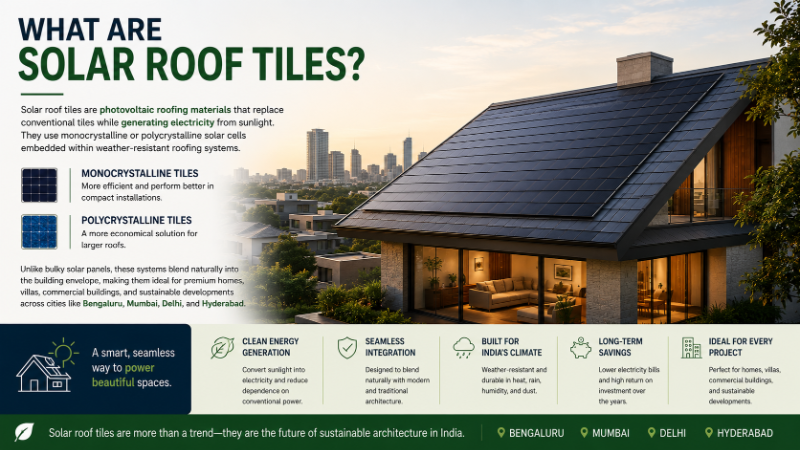
Solar roof tiles are photovoltaic roofing materials that replace conventional tiles while generating electricity from sunlight. They use monocrystalline or polycrystalline solar cells embedded within weather-resistant roofing systems. Monocrystalline tiles are more efficient and perform better in compact installations, while polycrystalline options offer a more economical solution for larger roofs.
Unlike bulky solar panels, these systems blend naturally into the building envelope, making them ideal for premium homes, villas, commercial buildings, and sustainable developments across cities like Bengaluru, Mumbai, Delhi, and Hyderabad.
Why Architects Are Choosing BIPV Roofing
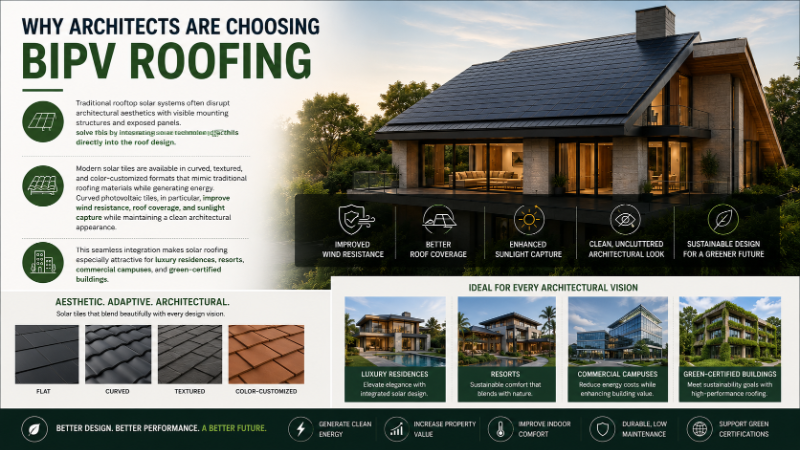
Traditional rooftop solar systems often disrupt architectural aesthetics with visible mounting structures and exposed panels. BIPV roofing systems solve this by integrating solar technology directly into the roof design.
Modern solar tiles are available in curved, textured, and color-customized formats that mimic traditional roofing materials while generating energy. Curved photovoltaic tiles, in particular, improve wind resistance, roof coverage, and sunlight capture while maintaining a clean architectural appearance.
This seamless integration makes solar roofing especially attractive for luxury residences, resorts, commercial campuses, and green-certified buildings.
Designed for India’s Climate
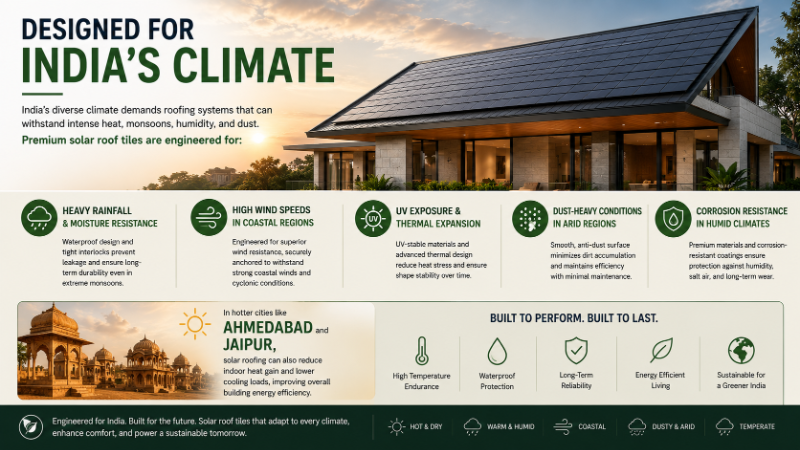
India’s diverse climate demands roofing systems that can withstand intense heat, monsoons, humidity, and dust. Premium solar roof tiles are engineered for:
Heavy rainfall and moisture resistance
High wind speeds in coastal regions
UV exposure and thermal expansion
Dust-heavy conditions in arid regions
Corrosion resistance in humid climates
In hotter cities like Ahmedabad and Jaipur, solar roofing can also reduce indoor heat gain and lower cooling loads, improving overall building energy efficiency.
Benefits Beyond Energy Generation
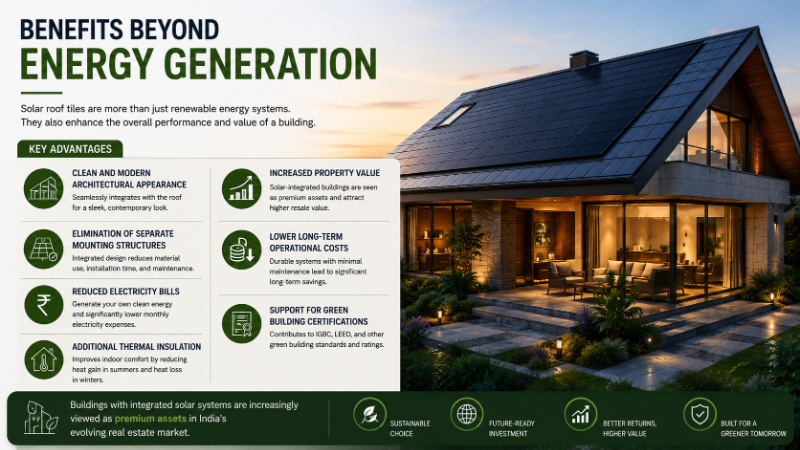
Solar roof tiles are more than just renewable energy systems. They also enhance the overall performance and value of a building.
Key Advantages:
Clean and modern architectural appearance
Elimination of separate mounting structures
Reduced electricity bills
Additional thermal insulation
Increased property value
Lower long-term operational costs
Support for green building certifications
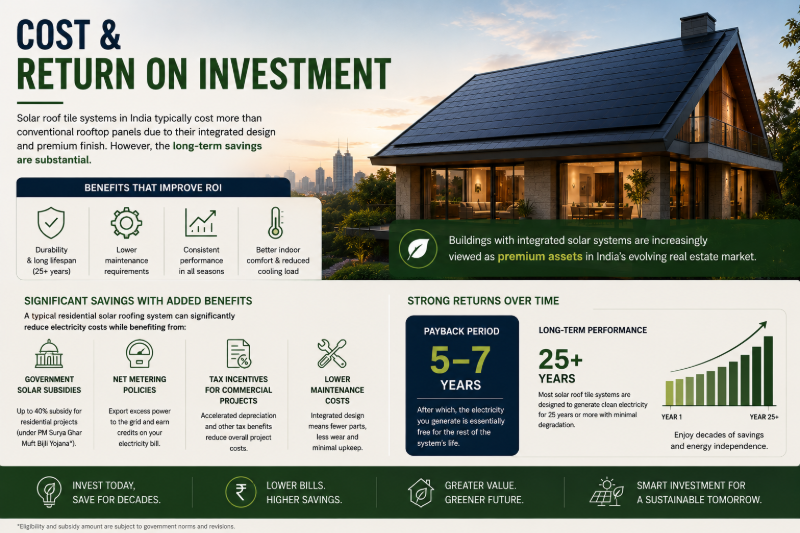
Buildings with integrated solar systems are increasingly viewed as premium assets in India’s evolving real estate market.
Cost and Return on Investment
Solar roof tile systems in India typically cost more than conventional rooftop panels due to their integrated design and premium finish. However, the long-term savings are substantial.
A typical residential solar roofing system can significantly reduce electricity costs while benefiting from:
Government solar subsidies
Net metering policies
Tax incentives for commercial projects
Lower maintenance costs
Most systems offer a payback period of around 5–7 years, while continuing to generate electricity for 25 years or more.
Applications in Residential and Commercial Projects
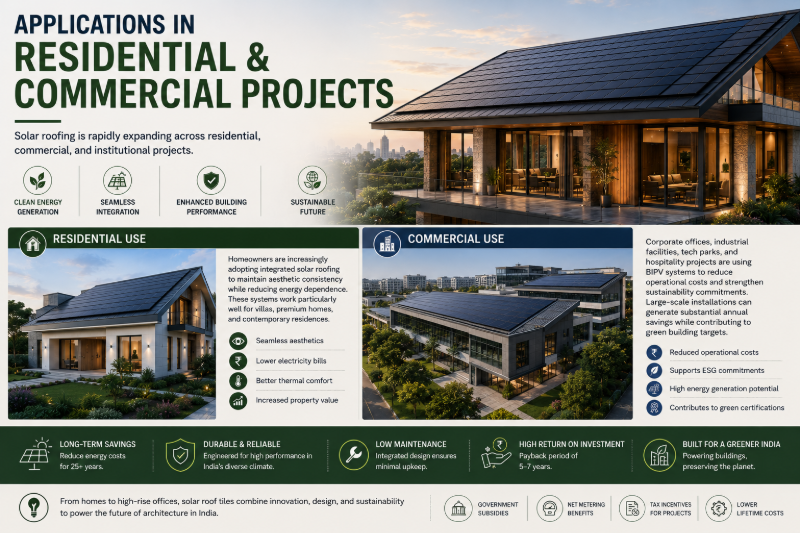
Solar roofing is rapidly expanding across residential, commercial, and institutional projects.
Residential Use
Homeowners are increasingly adopting integrated solar roofing to maintain aesthetic consistency while reducing energy dependence. These systems work particularly well for villas, premium homes, and contemporary residences.
Commercial Use
Corporate offices, industrial facilities, tech parks, and hospitality projects are using BIPV systems to reduce operational costs and strengthen sustainability commitments. Large-scale installations can generate substantial annual savings while contributing to green building targets.
The Future of Solar Roofing in India
As renewable energy adoption accelerates, solar roof tiles are expected to become a standard part of modern construction. Improvements in solar efficiency, battery storage integration, and material design are making these systems more accessible and visually refined.
The future of architecture is no longer just about designing buildings it is about designing buildings that perform. Solar roof tiles represent this shift perfectly by merging sustainability, technology, and aesthetics into one integrated solution.
For architects, developers, and property owners, integrated solar roofing is no longer an experimental feature -- it is becoming an essential component of future-ready design.