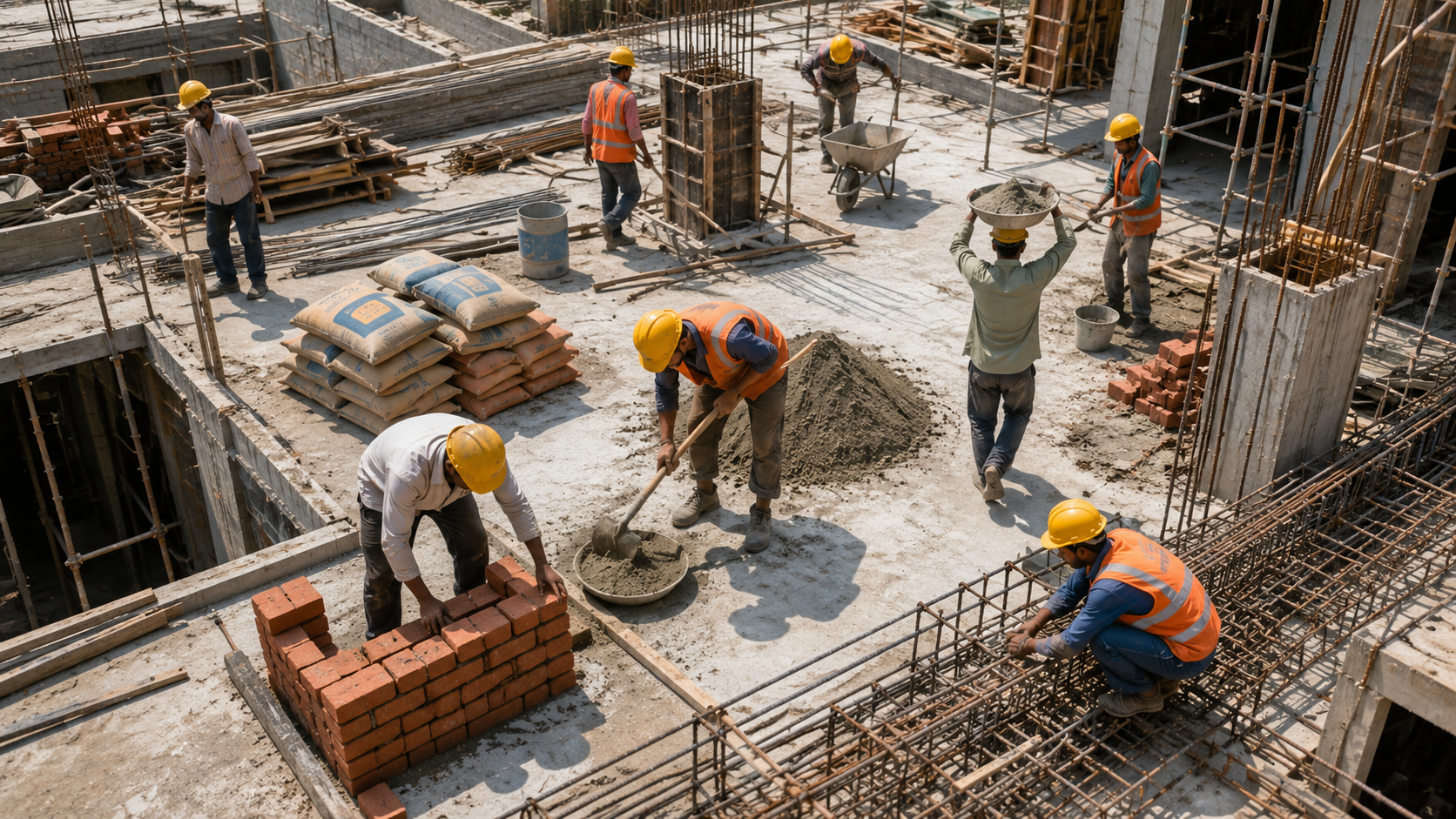
Starting a construction project is one of the most significant investments you'll make, whether it's a residential home, commercial space, or industrial facility. In India, where construction involves navigating complex regulations, varying climate conditions, and diverse stakeholder requirements, proper planning before breaking ground is essential. This comprehensive checklist will help you avoid costly mistakes, delays, and legal complications.
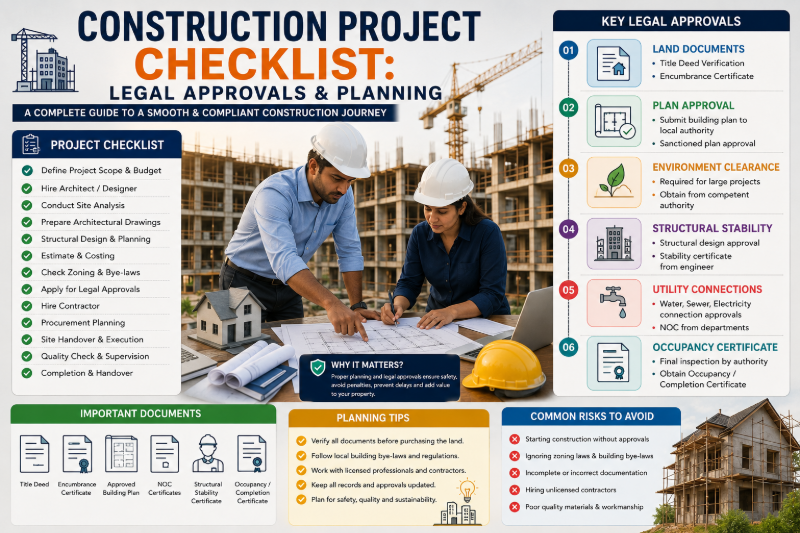
1. Legal Documentation and Approvals
Before any construction work begins, you must secure all necessary legal permissions and approvals. This is the foundation of any legitimate construction project in India.
Build cost · Bengaluru, May 2026
Land Title Verification
Start by verifying the land title through the local municipal corporation or revenue department. Ensure that:
The land is registered in the seller's name with no disputes
There are no pending litigation cases or encumbrances
The property deed is authentic and properly documented
All previous transactions are clear and traceable
In cities like Bangalore, Mumbai, and Delhi, where property values are high, title verification becomes even more critical. Engage a property lawyer to conduct a thorough title search spanning at least 12-15 years.
Building Permission and Sanctioned Plan
You cannot legally commence construction without obtaining the sanctioned building plan from your local municipal authority. The process typically involves:
Submitting architectural drawings prepared by a licensed architect
Obtaining NOC (No Objection Certificate) from relevant departments
Paying applicable fees and charges
Receiving the final sanctioned plan stamp from the municipal corporation
Processing times vary by city—in Pune and Hyderabad, this may take 30-60 days, while in tier-2 cities, it could be faster. Always work with experienced architects who understand local building bylaws.
Environmental Clearance
Depending on your project type and location, you may need environmental clearance. Projects in sensitive areas near water bodies, forests, or in certain zones require:
Environmental Impact Assessment (EIA) report
Environmental Clearance Certificate from the Ministry of Environment, Forest and Climate Change
Compliance with Coastal Regulation Zone (CRZ) rules if applicable
Frequently asked
2. Financial Planning and Budget Assessment
A realistic budget is crucial for project success. Construction costs in India vary significantly by location, materials, and specifications.
Detailed Cost Estimation
Obtain detailed cost estimates from multiple contractors. As of 2024, typical construction costs in India range from:
₹800-1,200 per square foot for basic residential construction
₹1,500-2,500 per square foot for mid-range residential projects
₹2,500-4,000+ per square foot for premium residential or commercial spaces
These costs vary significantly between metros (Delhi, Mumbai, Bangalore) and tier-2 cities (Pune, Ahmedabad, Jaipur). Always add a 15-20% contingency buffer for unforeseen expenses.
Funding Arrangements
Confirm your funding sources before starting construction:
Personal savings or equity
Home loans or construction financing from banks
Investor capital for commercial projects
Government schemes or subsidies if applicable
Ensure funds are available in tranches aligned with project milestones to avoid construction halts.
3. Site Assessment and Soil Investigation
Understanding your land's characteristics is fundamental to safe and economical construction.
Soil Testing
Conduct a comprehensive soil investigation through a geotechnical engineer. This includes:
Soil boring and sampling at multiple depths
Laboratory analysis for soil composition, bearing capacity, and settlement characteristics
Identification of water table levels
Assessment of soil type (clay, sand, silt) and its implications for foundation design
In cities like Kolkata and Chennai with high water tables, or in areas with expansive soils, this becomes especially important. A proper geotechnical report costs ₹15,000-50,000 but can save you hundreds of thousands in foundation issues later.
Site Survey and Leveling
Conduct a detailed topographical survey to understand:
Site elevation and slopes
Existing drainage patterns
Proximity to utilities (water, electricity, sewage)
Boundary demarcation and encroachments
4. Infrastructure and Utilities Planning
Ensure adequate infrastructure exists or can be developed before construction begins.
Water Supply and Sewerage
Verify:
Municipal water connection availability and capacity
Sewerage line proximity and connection feasibility
Need for borewells or rainwater harvesting systems
Septic tank requirements if municipal sewerage is unavailable
In water-scarce regions like Rajasthan and parts of Maharashtra, water management planning is critical.
Electricity and Gas Connections
Contact local electricity boards and gas authorities for:
Load availability and connection timeline
Temporary power arrangements during construction
Gas pipeline availability (if needed)
Cost estimates for connection and infrastructure upgrades
Access Roads and Parking
Ensure adequate access for construction vehicles and materials. Verify:
Road width and condition leading to the site
Parking arrangements for workers and vehicles
Municipal permissions for temporary road closures or diversions
Impact on surrounding residents or businesses
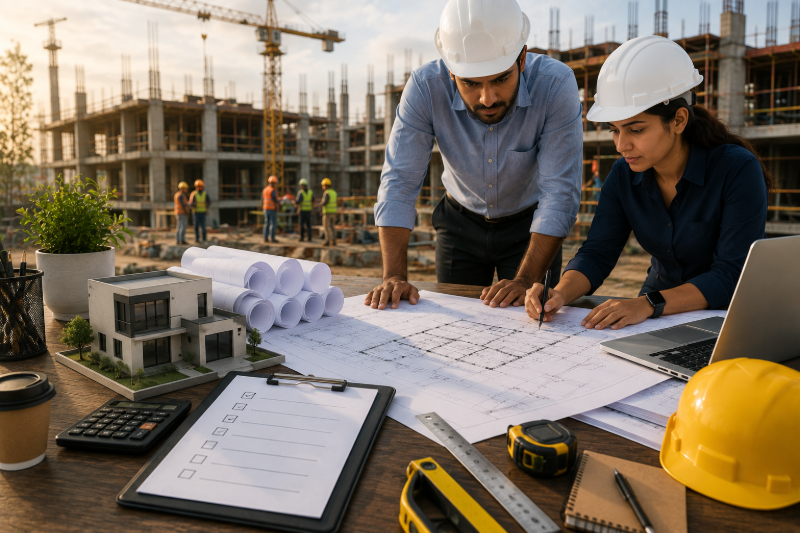
5. Contractor Selection and Agreements
Choosing the right contractor is one of the most important decisions in your construction journey.
Contractor Evaluation
When selecting a contractor, evaluate:
Track record and references from previous projects
Financial stability and credentials
Technical expertise and workforce capabilities
Insurance coverage and safety protocols
Licensing and registration with relevant authorities
For larger projects, consider engaging a project management consultant through platforms like AECORD, which connects you with vetted professionals in your area.
Detailed Contract Terms
A comprehensive construction contract should include:
Detailed scope of work with specifications
Project timeline with milestone dates
Payment schedule (typically 20-30% advance, 40% mid-term, 50% final)
Quality standards and inspection procedures
Penalties for delays and provisions for extensions
Dispute resolution mechanisms
Insurance and liability clauses
Avoid verbal agreements. Always have written contracts reviewed by a legal professional familiar with construction law in your state.
6. Design and Technical Planning
Ensure architectural and structural designs are comprehensive and compliant with all regulations.
Architectural Design
Your architect should provide:
Detailed floor plans and elevations
3D renderings for visualization
Compliance with local building bylaws and zoning regulations
Accessibility features as per Indian Standards (IS codes)
Fire safety and emergency exit provisions
Structural Design
A structural engineer must design:
Foundation system based on soil characteristics
Load-bearing capacity and reinforcement details
Seismic design parameters (crucial in earthquake-prone zones like Himachal Pradesh and Northeast India)
Wind load calculations for high-rise structures
Detailed construction drawings for execution
7. Safety and Insurance Planning
Construction sites present significant safety risks. Proper planning minimizes accidents and protects all stakeholders.
Safety Protocols
Establish comprehensive safety measures:
Site safety plan with designated safety officer
Personal protective equipment (PPE) requirements
Scaffolding and temporary structure safety standards
Electrical safety measures
First aid facilities and emergency procedures
Regular safety audits and worker training
Insurance Coverage
Obtain appropriate insurance policies:
Contractor's All Risks (CAR) insurance
Workers' compensation insurance
Public liability insurance
Equipment and materials insurance
For projects exceeding ₹1 crore, comprehensive insurance is non-negotiable and often mandated by lenders.
8. Material Sourcing and Supply Chain
Plan your material procurement strategy to ensure quality and timely delivery.
Material Specifications
Define quality standards for all materials:
Cement grade and brand specifications
Steel reinforcement quality and testing requirements
Aggregates and sand sourcing
Brick and block specifications
Finishing materials (tiles, paint, fixtures)
Ensure all materials comply with relevant Indian Standards (IS codes).
Supply Chain Management
Establish reliable supplier relationships:
Negotiate competitive rates with multiple suppliers
Ensure timely delivery schedules
Plan for storage and inventory management
Implement quality checking procedures at delivery
Build contingency for material shortages or price fluctuations
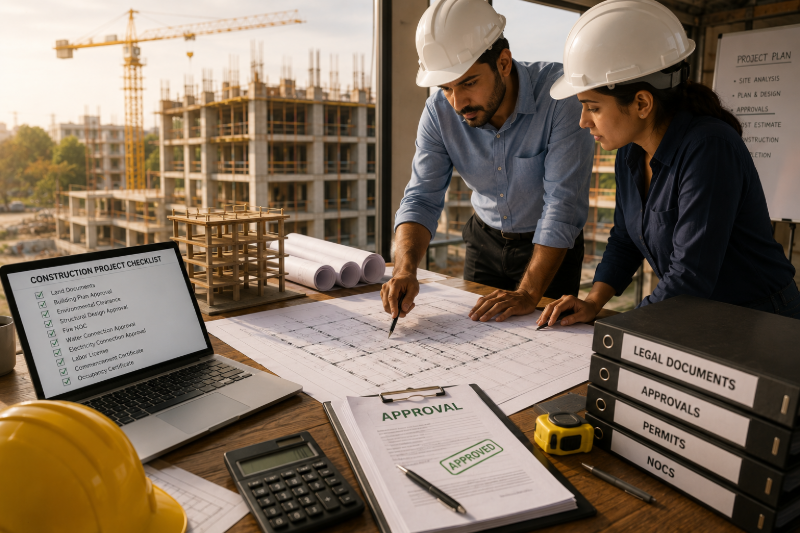
9. Environmental and Community Considerations
Responsible construction requires consideration of environmental and social impacts.
Waste Management
Plan for construction waste disposal:
Segregation of waste (concrete, wood, metal, hazardous)
Compliance with Construction and Demolition Waste Management Rules
Recycling and reuse opportunities
Licensed waste disposal facilities
Dust and Pollution Control
Implement measures to minimize environmental impact:
Water spraying to control dust
Proper ventilation and air quality management
Noise control measures during restricted hours
Stormwater management and erosion control
Community Relations
Maintain positive relationships with neighbors:
Inform residents about construction timeline and activities
Establish complaint redressal mechanisms
Minimize disruption to surrounding areas
Conduct community meetings if required
10. Project Management and Monitoring Systems
Establish robust systems to track progress and maintain quality throughout construction.
Documentation and Record-Keeping
Maintain comprehensive records:
Daily site reports and progress logs
Material testing certificates and quality reports
Worker attendance and payroll records
Payment receipts and financial transactions
Photographs and video documentation
Inspection and approval records
Quality Assurance
Implement regular quality checks:
Third-party inspection at critical stages
Material testing and certification
Workmanship verification against specifications
Compliance with building codes and standards
Progress Monitoring
Track project advancement:
Weekly or bi-weekly site meetings
Progress against planned schedule
Identification and resolution of delays
Budget tracking and cost management
Risk identification and mitigation
11. Pre-Construction Meeting Checklist
Before work begins, conduct a comprehensive pre-construction meeting with all stakeholders including the contractor, architect, structural engineer, and client.
During this meeting, confirm:
Mobilization date and initial activities
Site access and temporary facilities
Communication protocols and reporting structure
Quality standards and inspection procedures
Safety requirements and emergency contacts
Payment schedule and financial arrangements
Timeline and milestone dates
Change order procedures
Dispute resolution process
12. Final Pre-Construction Verification
In the final days before construction starts, verify:
All approvals and permits are in place and accessible on-site
Site is cleared of any encroachments or obstacles
Boundary walls or temporary fencing is erected
Temporary facilities (office, storage, toilets) are ready
Safety signage is posted prominently
Emergency contact numbers are displayed
Site insurance is active
Workers have received safety induction
Material suppliers are confirmed and ready
Equipment and machinery are available and functional
Conclusion
A well-planned construction project is significantly more likely to stay on schedule and within budget. This comprehensive checklist addresses the major areas you need to consider before breaking ground. While the process may seem lengthy, investing time in proper planning now will save you from costly mistakes, legal complications, and project delays later.
Remember that construction requirements vary by state and municipality in India, so always consult with local authorities and professionals familiar with your specific location. Whether you're building in Bangalore, Delhi, Mumbai, or any other Indian city, these principles remain fundamental to successful construction.
If you need to find qualified architects, structural engineers, contractors, or project management professionals for your construction project, AECORD connects you with vetted AECO professionals across India. Browse our directory to find experienced professionals who understand local regulations and best practices in your area. Whether you're in a metro city or a tier-2 location, AECORD makes it easy to find the right team to bring your construction vision to life.
Ready to start your construction project the right way? Visit AECORD today to connect with experienced professionals who can guide you through every phase of your construction journey.
Frequently Asked Questions
What legal approvals do I need before starting construction in India?
You must obtain land title verification, a sanctioned building plan from your municipal authority, and environmental clearance if applicable. The process involves submitting architectural drawings, obtaining NOCs from relevant departments, and receiving final approval from the municipal corporation, which typically takes 30-60 days depending on your city.
How much does construction cost per square foot in India?
As of 2024, construction costs range from ₹800-1,200 per sq ft for basic residential, ₹1,500-2,500 for mid-range, and ₹2,500-4,000+ for premium or commercial projects. Costs vary significantly between metros like Delhi and Mumbai versus tier-2 cities, and you should add a 15-20% contingency buffer for unforeseen expenses.
Why is soil testing important before construction?
Soil testing is fundamental to understanding your land's characteristics and ensures safe, economical construction. A comprehensive geotechnical investigation determines the soil's bearing capacity and informs proper foundation design for your specific project.
How long should a property title verification take?
A thorough title verification should span at least 12-15 years to ensure the land is registered without disputes, pending litigation, or encumbrances. Engaging a property lawyer is recommended, especially in high-value property markets like Bangalore, Mumbai, and Delhi.
What funding options are available for construction projects in India?
Funding sources include personal savings, home loans or construction financing from banks, investor capital for commercial projects, and government schemes or subsidies if applicable. Ensure funds are available in tranches aligned with project milestones to prevent construction delays.