

Balcony Garden Ideas for Indian Apartments in 2026
Creating a thriving balcony garden in Indian apartments has become increasingly popular as urban dwellers seek to reconnect with nature and improve their living spaces. Whether you're in Mumbai, Bangalore, Delhi, or any other major Indian city, a well-designed balcony garden can transform your outdoor space into a lush, productive sanctuary. This comprehensive guide explores innovative balcony gardening ideas tailored specifically for Indian apartments in 2026.
Build cost · Bengaluru, May 2026
Why Balcony Gardening is Perfect for Indian Apartments
Indian apartments, particularly in metropolitan areas, often come with limited outdoor space. However, balconies present an ideal opportunity to cultivate plants, vegetables, and flowers without requiring a dedicated garden. Balcony gardening offers multiple benefits:
Space optimization: Maximize your apartment's outdoor area with vertical and container gardening solutions
Air quality improvement: Plants naturally purify indoor air, reducing pollutants common in urban Indian cities
Mental health benefits: Regular interaction with plants reduces stress and anxiety
Fresh produce: Grow herbs, vegetables, and fruits for your kitchen
Property value enhancement: A well-maintained balcony garden increases apartment appeal and resale value
Understanding Your Balcony's Microclimate
Before planning your balcony garden, assess your specific environmental conditions. Indian cities experience diverse climates, and your balcony's exposure significantly impacts plant selection.
Sunlight Exposure
Balconies in Indian apartments typically receive varying amounts of sunlight:
North-facing balconies: 2-4 hours of indirect sunlight, ideal for shade-loving plants like ferns, pothos, and mint
East-facing balconies: 4-6 hours of morning sunlight, perfect for most vegetables and herbs
West-facing balconies: 4-6 hours of intense afternoon sun, suitable for heat-tolerant plants like succulents and marigolds
South-facing balconies: 6+ hours of direct sunlight, excellent for sun-loving vegetables and flowering plants
Frequently asked
Wind and Temperature Conditions
Higher-floor balconies in Indian apartment complexes often experience stronger winds and temperature fluctuations. Consider installing wind-breaking screens or selecting sturdy, wind-resistant plants. In cities like Delhi, temperature variations between seasons are significant, requiring careful plant selection for year-round gardening.
Container Selection and Soil Preparation
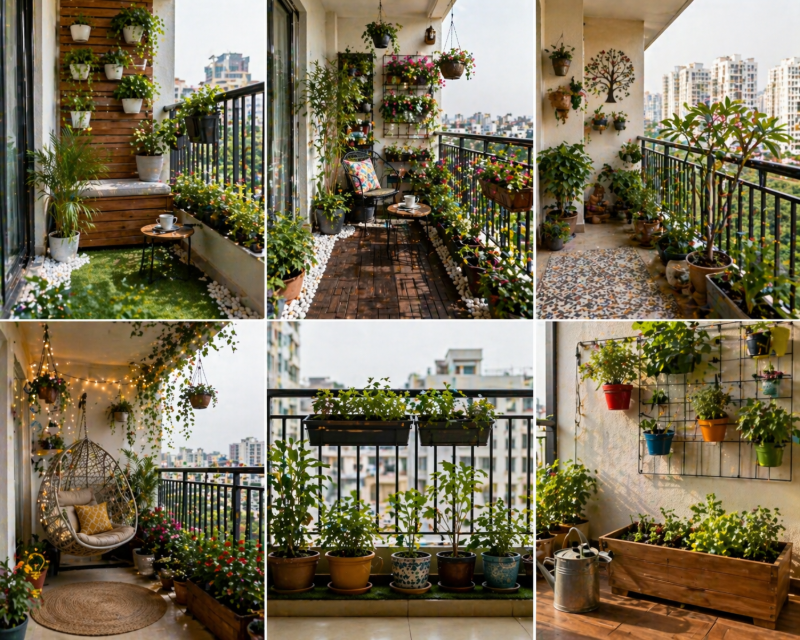
Choosing appropriate containers is fundamental to successful balcony gardening. The right containers ensure proper drainage, root development, and plant health.
Container Types and Sizes
Terracotta pots: Breathable and aesthetically pleasing, ranging from ₹50 to ₹500 depending on size. Ideal for herbs and small plants.
Plastic containers: Lightweight, durable, and affordable (₹30-₹200). Perfect for balconies with weight restrictions.
Fabric grow bags: Excellent for vegetables, available in 5L to 50L sizes, priced between ₹100-₹1,000. Provide superior drainage and aeration.
Wooden planters: Stylish and insulating, though require maintenance. Costs range from ₹200-₹2,000.
Self-watering containers: Ideal for busy professionals in Indian cities, maintaining consistent moisture levels. Prices start from ₹500.
When selecting container size, follow this rule: smaller plants need 4-6 inch containers, medium plants require 8-10 inch containers, and larger vegetables need 12+ inch containers or grow bags.
Soil Composition for Balcony Gardens
Quality soil is crucial for plant success. Rather than using garden soil, which can become compacted, create a balanced potting mix:
40% coco-peat or peat moss (moisture retention)
30% compost or aged manure (nutrients)
20% perlite or vermiculite (drainage and aeration)
10% neem cake or organic fertilizer (pest control and nutrition)
Pre-made potting mixes are available across Indian cities at nurseries and online platforms. AECORD connects you with local suppliers who can deliver quality soil mixes to your apartment in cities like Bangalore, Hyderabad, and Chennai.
Best Plants for Indian Apartment Balconies in 2026
Herbs for Culinary Use
Growing herbs is one of the most rewarding aspects of balcony gardening. Fresh herbs enhance Indian cooking while requiring minimal space.
Mint: Extremely hardy, thrives in partial shade, perfect for chai and beverages. Grows in 4-6 weeks.
Coriander: Essential for Indian cuisine, prefers cool weather. Best grown during October-March in most Indian cities.
Basil: Loves sunlight, ready to harvest in 3-4 weeks. Ideal for south or east-facing balconies.
Parsley: Tolerates shade, requires consistent moisture. Excellent for north-facing balconies.
Fenugreek (Methi): Highly nutritious, grows quickly in cool seasons. Popular in North Indian households.
Oregano: Drought-tolerant, perennial herb perfect for Indian summers.
Vegetables for Apartment Balconies
Growing vegetables on balconies is increasingly popular among health-conscious urban Indians. Container-friendly vegetables include:
Tomatoes: Cherry and determinate varieties work best. Require 6+ hours of sunlight and sturdy support structures.
Peppers: Bell peppers and chili peppers thrive in warm Indian climates. Require 4-6 hours of sunlight.
Lettuce and leafy greens: Grow quickly, perfect for beginners. Tolerate partial shade, ideal for monsoon seasons.
Cucumber: Compact varieties available, require vertical support. Thrive in warm weather.
Radishes: Fast-growing, ready in 3-4 weeks. Excellent for succession planting.
Beans: Nitrogen-fixing plants that improve soil. Bush varieties suitable for containers.
Ornamental Plants and Flowers
Enhance your balcony's aesthetic appeal with carefully selected flowering plants:
Marigolds: Hardy, colorful, and pest-repellent. Bloom year-round in most Indian climates.
Zinnias: Vibrant flowers, drought-tolerant, attract pollinators.
Petunias: Long-flowering season, available in multiple colors.
Geraniums: Classic choice, fragrant, require minimal care.
Bougainvillea: Heat and drought-tolerant, spectacular blooms. Perfect for Indian summers.
Jasmine: Fragrant flowers, suitable for balcony railings. Popular in Indian gardens.
Innovative Balcony Gardening Techniques for 2026
Vertical Gardening Systems
Maximize space with vertical gardening solutions increasingly popular in Indian cities:
Wall-mounted planters: Install tiered planters on balcony walls, costing ₹500-₹3,000 per setup. Ideal for herbs and small plants.
Hanging baskets: Utilize overhead space with hanging containers. Perfect for trailing plants like pothos and string of pearls.
Trellis systems: Install wooden or metal trellises for climbing vegetables and flowers. Cost ranges from ₹300-₹2,000.
Tower gardens: Stackable containers creating vertical gardens. Modern option gaining popularity in metropolitan areas.
Wall-mounted pocket gardens: Fabric pockets attached to walls, ideal for small plants and succulents. Available for ₹800-₹2,500.
Smart Watering Solutions
Consistent watering is crucial for balcony plants, especially in Indian summers. Modern solutions include:
Drip irrigation systems: Automated watering reduces manual effort. DIY kits available for ₹1,000-₹3,000.
Self-watering systems: Containers with built-in water reservoirs maintain consistent moisture.
Mulching: Apply 2-3 inches of organic mulch to reduce water evaporation, particularly important in hot Indian cities like Ahmedabad and Pune.
Water conservation techniques: Collect rainwater in barrels for supplemental watering during dry seasons.
Composting on Balconies
Create nutrient-rich compost without dedicated space:
Vermicomposting: Use earthworms in compact bins to convert kitchen waste into compost. Bins cost ₹1,500-₹5,000.
Bokashi composting: Anaerobic fermentation method suitable for small spaces. Bucket systems available for ₹2,000-₹4,000.
Compost tea: Brew nutrient-rich liquid fertilizer from finished compost for regular plant feeding.
Seasonal Gardening Calendar for Indian Apartments
Summer (March-June)
Focus on heat-tolerant plants and consistent watering:
Grow peppers, eggplants, and heat-loving herbs like basil and oregano
Increase watering frequency, especially for west and south-facing balconies
Provide shade cloth for sensitive plants during peak summer months
Harvest regularly to encourage continuous production
Monsoon (June-September)
Manage excess moisture and prevent fungal issues:
Grow leafy greens and shade-tolerant herbs
Ensure proper drainage to prevent waterlogging
Reduce watering frequency as rainfall supplements plant needs
Monitor for pests and fungal diseases common during monsoons in Indian cities
Winter (October-February)
Ideal season for most vegetables and herbs in Indian climates:
Plant cool-season vegetables: broccoli, cabbage, carrots, and leafy greens
Grow coriander, fenugreek, and parsley for winter cooking
Reduce watering as evaporation decreases
This season offers optimal growing conditions across most Indian cities
Pest and Disease Management
Balcony gardens are less prone to pests than ground-level gardens, but prevention is essential:
Organic Pest Control Methods
Neem oil spray: Effective against most pests, cost-effective at ₹200-₹500 per liter
Insecticidal soap: Homemade solution using dish soap and water
Companion planting: Grow marigolds with vegetables to repel harmful insects
Manual removal: Regularly inspect plants and remove pests by hand
Beneficial insects: Encourage ladybugs and lacewings by planting flowering plants
Disease Prevention
Ensure proper air circulation by spacing containers appropriately
Water at soil level, avoiding foliage to prevent fungal diseases
Remove diseased leaves promptly
Sterilize tools between plants to prevent disease spread
Budget-Friendly Tips for Balcony Gardening
Starting a balcony garden doesn't require significant investment. Strategic planning can reduce costs considerably:
Upcycle containers: Use old buckets, bottles, and jars instead of purchasing new pots. Drill drainage holes for proper water management.
Propagate from cuttings: Grow new plants from existing herbs like mint and basil, saving ₹50-₹100 per plant.
Collect seeds: Save seeds from mature plants for next season's planting.
Make your own compost: Reduce fertilizer costs by composting kitchen waste.
Buy seedlings: Purchase young plants from local nurseries (₹20-₹50) rather than seeds for faster results.
Share resources: Connect with neighbors to share tools, seeds, and gardening knowledge.
Connecting with Gardening Professionals Through AECORD
While balcony gardening is a rewarding DIY activity, professional guidance can optimize your results. AECORD, India's leading B2B2C marketplace for AECO professionals, connects apartment dwellers with experienced gardening consultants, landscape designers, and horticulturists across major Indian cities.
Whether you need advice on container selection, soil composition, plant selection for your specific balcony conditions, or irrigation system installation, AECORD provides access to qualified professionals. Designers on AECORD can create customized balcony garden plans tailored to your apartment's specific microclimate and your personal preferences.
Additionally, AECORD connects you with suppliers for quality gardening materials, from premium potting mixes to innovative vertical gardening systems available throughout India.
Maintenance and Care Tips
Regular Maintenance Schedule
Daily: Check soil moisture and water as needed
Weekly: Inspect plants for pests and diseases, remove dead leaves
Bi-weekly: Fertilize growing plants with balanced fertilizer or compost tea
Monthly: Prune plants to encourage bushier growth and remove spent flowers
Seasonal: Repot plants as needed, refresh top soil, plan for seasonal transitions
Fertilizing Your Balcony Garden
Container plants require regular feeding as nutrients leach from frequent watering:
Organic fertilizers: Neem cake, bone meal, and fish emulsion provide slow-release nutrients
Compost tea: Brew finished compost in water for liquid fertilizer costing minimal amounts
Commercial fertilizers: Balanced NPK fertilizers (10-10-10) available for ₹150-₹500
Foliar feeding: Spray diluted fertilizer directly on leaves for quick nutrient absorption
Conclusion
Balcony gardening offers Indian apartment dwellers an accessible path to growing their own food, improving air quality, and creating beautiful outdoor spaces. Whether you're in Bangalore's tech corridor, Mumbai's high-rises, Delhi's bustling neighborhoods, or any other Indian city, a thriving balcony garden is achievable with proper planning and consistent care.
Start small with herbs and leafy greens to build confidence, then expand to vegetables and ornamental plants as you gain experience. Remember that each balcony presents unique conditions, requiring observation and adaptation to local climate patterns.
For personalized guidance tailored to your specific apartment's conditions and your gardening goals, explore AECORD to find experienced gardening professionals and landscape designers in your city. Whether you need help designing your balcony garden layout, installing irrigation systems, or selecting the perfect plants for your space, qualified professionals are available to assist.
Ready to transform your apartment balcony into a thriving garden? Visit AECORD today to connect with experienced gardening consultants and suppliers in your city. Start your balcony gardening journey and enjoy fresh produce, beautiful flowers, and improved air quality right from your apartment.
Frequently Asked Questions
What type of balcony is best for growing vegetables in Indian apartments?
East-facing and south-facing balconies are ideal for growing vegetables in Indian apartments. East-facing balconies provide 4-6 hours of morning sunlight, while south-facing balconies offer 6+ hours of direct sunlight, both of which are excellent for most vegetables and herbs.
Which containers are best for balcony gardening in Indian apartments?
The best container choice depends on your needs: plastic containers are lightweight and affordable for weight-restricted balconies, fabric grow bags are excellent for vegetables with superior drainage, and terracotta pots work well for herbs and small plants. Self-watering containers are ideal for busy professionals.
Can you grow vegetables on a north-facing balcony in India?
North-facing balconies receive only 2-4 hours of indirect sunlight, making them unsuitable for most vegetables. However, they're perfect for shade-loving plants like ferns, pothos, and mint, which can thrive with limited light exposure.
What are the main benefits of balcony gardening in Indian apartments?
Balcony gardening offers multiple benefits including space optimization for limited apartment areas, improved air quality through natural plant purification, mental health benefits from plant interaction, fresh produce for your kitchen, and increased property value for your apartment.
How do wind and temperature affect balcony gardens in Indian apartments?
Higher-floor balconies experience stronger winds and temperature fluctuations, requiring wind-resistant plants or protective screens. In cities like Delhi, seasonal temperature variations are significant, so you should select plants carefully to maintain a year-round garden.
Frequently Asked Questions
What type of balcony is best for growing vegetables in Indian apartments?
East-facing and south-facing balconies are ideal for growing vegetables in Indian apartments. East-facing balconies provide 4-6 hours of morning sunlight, while south-facing balconies offer 6+ hours of direct sunlight, both of which are excellent for most vegetables and herbs.
Which containers are best for balcony gardening in Indian apartments?
The best container choice depends on your needs: plastic containers are lightweight and affordable for weight-restricted balconies, fabric grow bags are excellent for vegetables with superior drainage, and terracotta pots work well for herbs and small plants. Self-watering containers are ideal for busy professionals.
Can you grow vegetables on a north-facing balcony in India?
North-facing balconies receive only 2-4 hours of indirect sunlight, making them unsuitable for most vegetables. However, they're perfect for shade-loving plants like ferns, pothos, and mint, which can thrive with limited light exposure.
What are the main benefits of balcony gardening in Indian apartments?
Balcony gardening offers multiple benefits including space optimization for limited apartment areas, improved air quality through natural plant purification, mental health benefits from plant interaction, fresh produce for your kitchen, and increased property value for your apartment.
How do wind and temperature affect balcony gardens in Indian apartments?
Higher-floor balconies experience stronger winds and temperature fluctuations, requiring wind-resistant plants or protective screens. In cities like Delhi, seasonal temperature variations are significant, so you should select plants carefully to maintain a year-round garden.