

Understanding Bison Panel Cement Bonded Particle Board: A Comprehensive Guide for Indian AECO Professionals
Cement bonded particle board has become an increasingly popular choice among architects, engineers, and construction professionals across India. The 35 mm thickness Bison Panel in 1220 mm x 2440 mm dimensions represents a premium building material that offers exceptional durability, fire resistance, and structural integrity. Whether you're working on commercial projects in Bangalore, residential developments in Mumbai, or industrial facilities in Delhi, understanding this material's properties and applications is crucial for making informed decisions on your projects.
Build cost · Bengaluru, May 2026
What is Bison Panel Cement Bonded Particle Board?
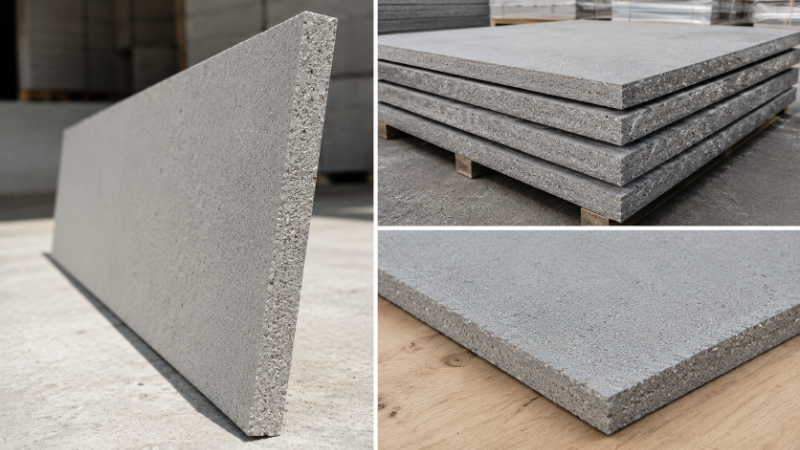
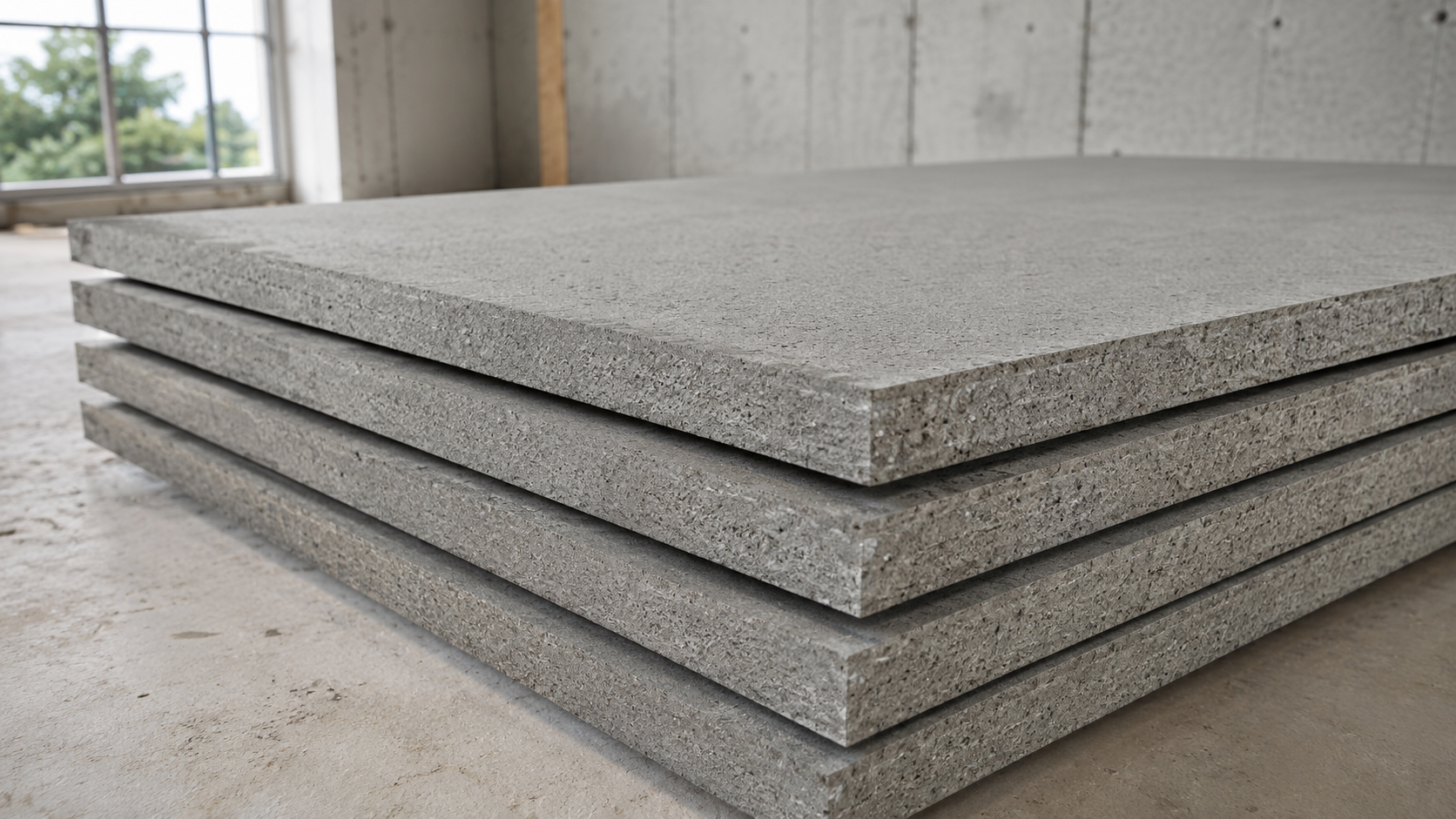
Bison Panel cement bonded particle board is a composite building material manufactured by binding wood particles with a Portland cement matrix. Unlike traditional plywood or particle boards that use synthetic adhesives, the cement bonding creates a fundamentally different product with superior performance characteristics.
Material Composition and Manufacturing Process
The manufacturing of cement bonded particle board involves several key stages. Wood particles—typically sourced from sustainably managed forests—are mixed with Portland cement, water, and various additives. This mixture is then formed into large panels under controlled pressure and temperature conditions. The cement hydration process creates an inorganic bond that is inherently more stable and durable than synthetic alternatives.
The 35 mm thickness variant is specifically engineered for applications requiring substantial structural support and enhanced load-bearing capacity. The standard dimensions of 1220 mm x 2440 mm (approximately 4 feet x 8 feet) make these panels compatible with standard construction module sizes commonly used across Indian construction projects.
Key Properties of the Grey Variant (504922)
The grey color designation in the product code (504922) indicates specific surface treatment and finish characteristics. This variant offers:
Superior moisture resistance – The cement matrix naturally resists water penetration better than organic-bonded alternatives
Excellent fire rating – Cement bonded boards typically achieve A1 or A2-s1, d0 fire classifications
Enhanced durability – Expected service life often exceeds 50 years in appropriate applications
Dimensional stability – Minimal expansion or contraction under varying humidity conditions
Biological resistance – Naturally resistant to fungal growth, termites, and other biological degradation
Frequently asked
Technical Specifications and Performance Standards
Dimensional and Weight Specifications
The 1220 mm x 2440 mm x 35 mm configuration provides:
Panel area: 2.97 square meters per sheet
Approximate weight: 150-160 kg per panel (density typically 1.1-1.2 g/cm³)
Modulus of Elasticity (MOE): 3000-4500 MPa
Modulus of Rupture (MOR): 8-12 MPa
These specifications make the 35 mm thickness particularly suitable for structural applications where deflection control is important.
Moisture and Environmental Performance
In India's diverse climate zones—from the humid coastal regions of Kerala and Goa to the arid conditions of Rajasthan—moisture management is critical. Cement bonded particle board exhibits:
Water absorption (24 hours): Typically 10-15% (significantly lower than plywood)
Thickness swelling: Less than 2% under standard test conditions
Moisture vapor transmission: Allows controlled vapor permeability, reducing condensation issues
This performance is particularly valuable in applications like bathroom cladding, kitchen backsplashes, and wet areas where traditional particle boards would fail.
Applications in Indian Construction Projects
Residential Construction
In residential projects across Indian metros and tier-2 cities, the 35 mm Bison Panel is increasingly specified for:
Interior partition walls – The 35 mm thickness provides excellent acoustic properties and structural stability
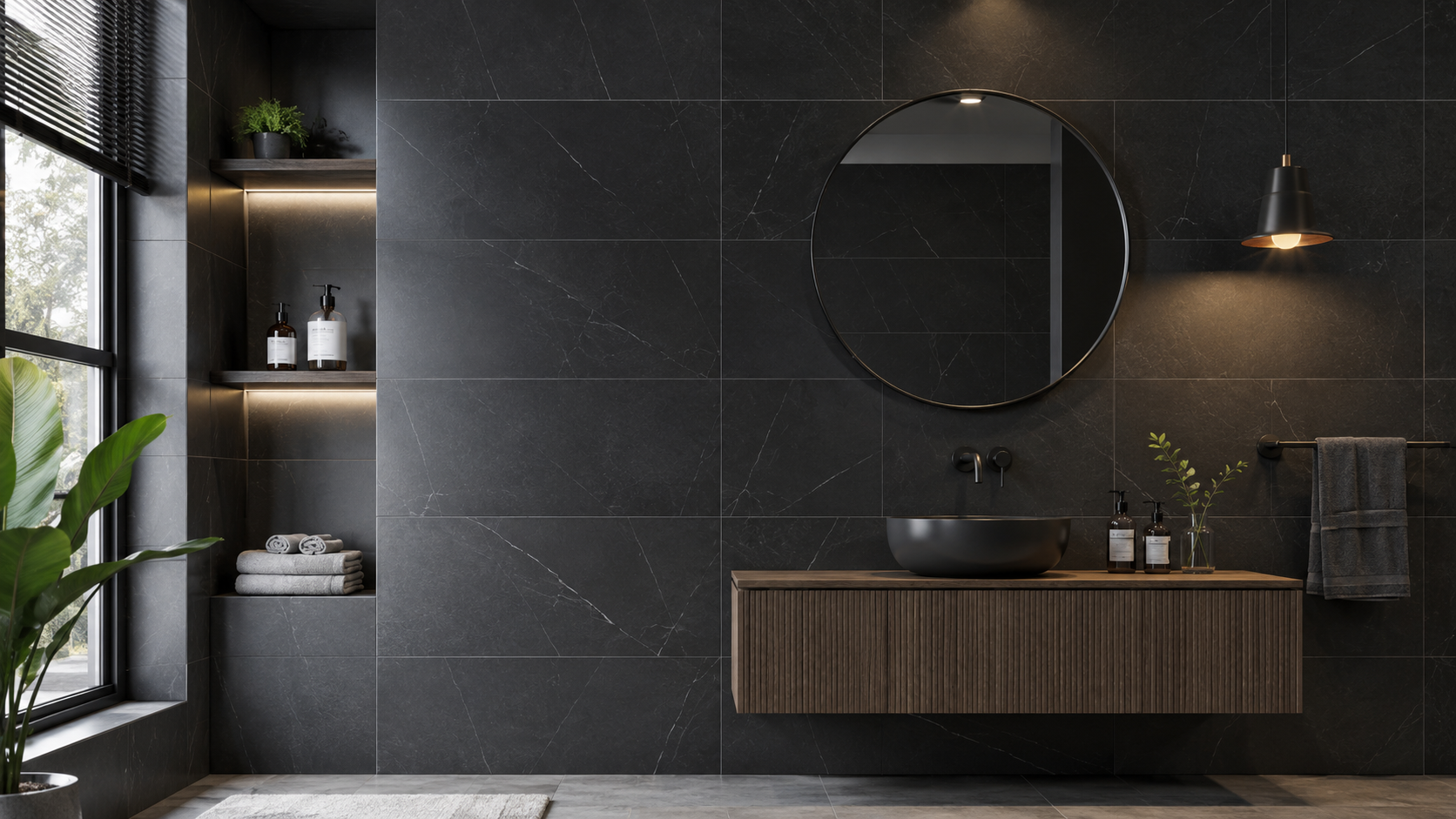
Bathroom and kitchen linings – Superior moisture resistance eliminates concerns about mold and deterioration
Flooring underlayment – Provides stable base for ceramic tiles or natural stone in wet areas
False ceilings – Offers fire protection and durability superior to gypsum alternatives
A typical 2000 sq ft apartment in Pune or Hyderabad might use 8-12 panels for various interior applications, representing an investment of approximately ₹80,000-₹120,000 at current market rates.
Commercial and Institutional Applications
Architects designing commercial spaces in Delhi, Bangalore, and other business hubs appreciate this material for:
Hospital and healthcare facility construction – Non-toxic, hygienic, and resistant to cleaning chemicals
Educational institution interiors – Durability and low maintenance reduce lifecycle costs
Office partitioning systems – Provides structural integrity for modular office layouts
Data center construction – Excellent fire performance and dimensional stability in climate-controlled environments
Industrial and Specialized Applications
The cement bonded composition makes this material ideal for demanding industrial environments:
Food processing facilities – Resistant to moisture, cleaning chemicals, and temperature fluctuations
Cold storage construction – Maintains structural integrity at subzero temperatures
Chemical storage areas – Superior resistance to chemical exposure compared to organic-bonded alternatives
Modular building systems – Increasingly used in prefabricated construction methods gaining popularity in India
Advantages Over Alternative Materials
Comparison with Traditional Plywood
While plywood remains the default choice for many Indian builders, cement bonded particle board offers distinct advantages:
Moisture resistance: Superior performance in humid climates without requiring additional protective coatings
Fire safety: Inherent fire resistance without chemical treatments
Durability: Longer service life reduces replacement costs over 30-50 year building lifecycles
Termite resistance: No chemical treatment required; naturally resistant to biological attack
Cost efficiency: Often 15-25% lower cost than equivalent quality plywood for structural applications
Advantages Over Particle Board and MDF
Conventional particle boards bonded with urea-formaldehyde or melamine adhesives cannot compete with cement bonded alternatives in critical applications:
Moisture performance: Conventional boards swell and deteriorate in wet conditions; cement bonded boards remain stable
Formaldehyde emissions: Zero formaldehyde content in cement bonded boards—important for indoor air quality in Indian homes
Load-bearing capacity: Superior strength-to-weight ratio for structural applications
Environmental durability: Maintains properties over decades without degradation
Installation and Handling Guidelines
Site Preparation and Storage
Proper handling ensures optimal performance:
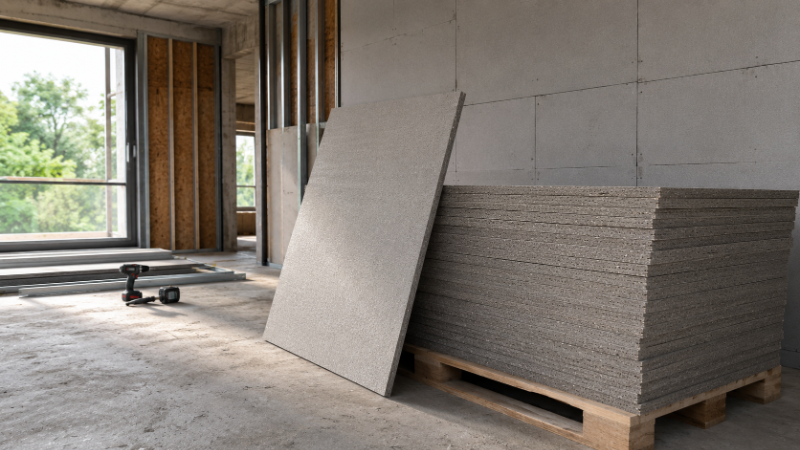
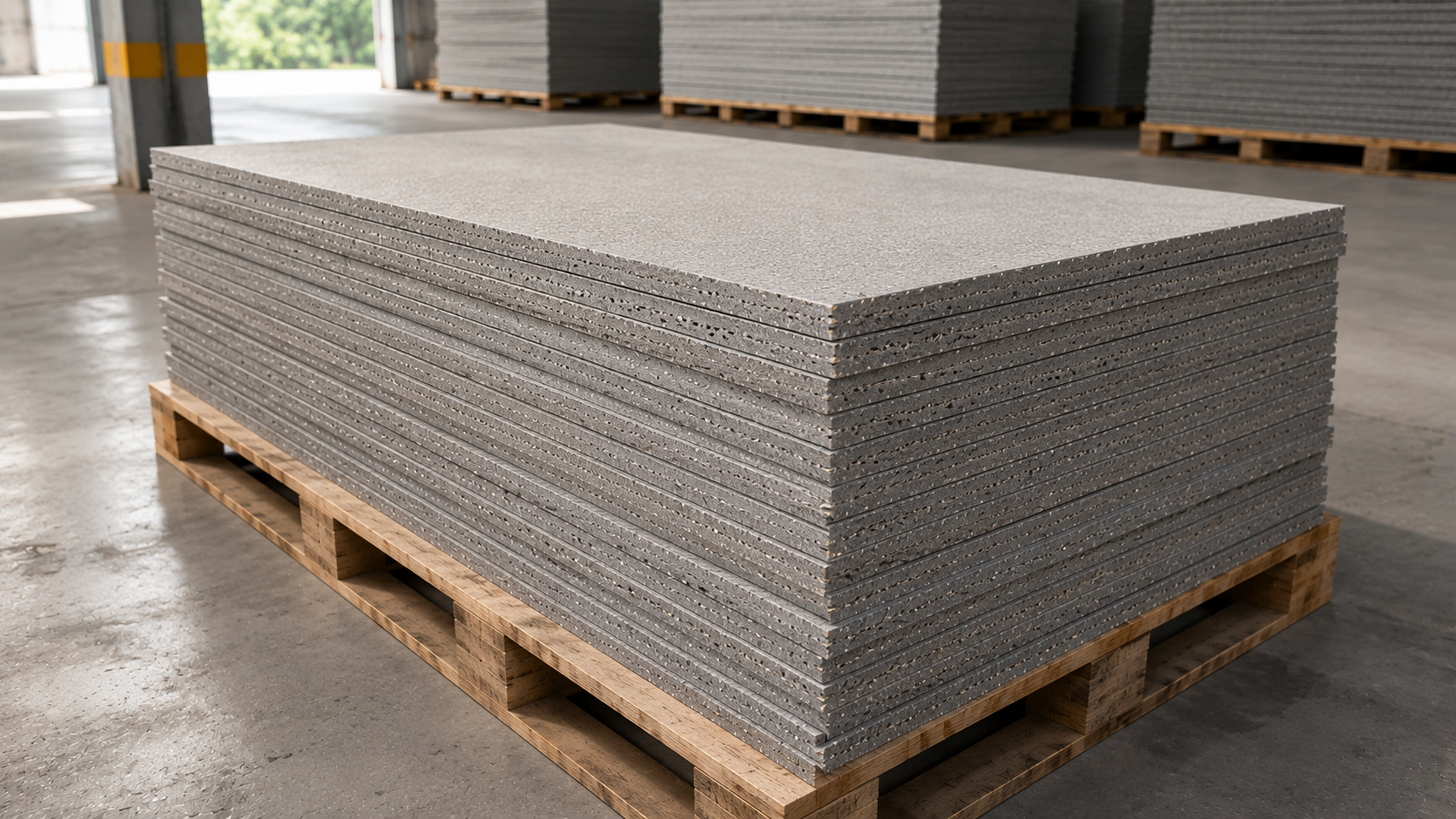
Store panels horizontally on level, dry surfaces to prevent warping
Protect from direct rainfall and standing water during construction
Allow adequate ventilation around stacked panels to prevent moisture accumulation
In humid coastal areas like Mumbai or Kochi, maintain storage areas with controlled humidity below 80%
Cutting and Fabrication
The 35 mm thickness requires appropriate tools:
Use carbide-tipped saw blades for clean cuts and extended blade life
Wear respiratory protection when cutting, as cement dust can be irritating
Make plunge cuts perpendicular to grain direction for cleanest edges
Allow cut edges to be sealed with appropriate sealants in wet applications
Fastening and Joinery
The dense, cement-bonded structure requires different fastening approaches than wood-based alternatives:
Use corrosion-resistant fasteners (stainless steel or hot-dipped galvanized) to prevent rust staining
Pre-drill holes to prevent splitting and ensure proper fastener seating
Space fasteners appropriately—typically 150-200 mm on center for structural applications
Countersink fasteners in finished applications to prevent water infiltration at fastener points
Cost Considerations and Economic Analysis
Current Market Pricing in India
As of 2024, the 35 mm thickness Bison Panel in 1220 x 2440 mm dimensions typically costs:
Delhi and NCR region: ₹2,200-₹2,800 per panel
Mumbai and Western India: ₹2,400-₹3,000 per panel
Bangalore and Southern India: ₹2,100-₹2,700 per panel
Kolkata and Eastern India: ₹2,300-₹2,900 per panel
Prices fluctuate based on cement costs, transportation, and regional demand. Bulk purchases for large projects often qualify for 8-15% discounts.
Lifecycle Cost Analysis
While initial cost may be 10-20% higher than conventional particle board, the total cost of ownership over 30 years is significantly lower:
Maintenance costs: Minimal—no pest treatment, no refinishing required
Replacement costs: Virtually eliminated due to superior durability
Health and environmental costs: Zero formaldehyde emissions reduce indoor air quality concerns
Insurance and compliance: Superior fire ratings may reduce insurance premiums in some cases
Quality Standards and Certifications
Indian and International Standards
Bison Panel cement bonded particle board typically complies with:
IS 4247:2018 – Indian Standard for cement bonded particle boards
EN 634 – European standard for cement bonded boards (often referenced in India)
ASTM D1037 – American standard for particle board properties
Fire classification: A1 or A2-s1, d0 under EN 13823 and EN ISO 1182
Certifications to Look For
When sourcing materials for your project, ensure products carry:
CE marking (for European products sold in India)
ISI certification from Bureau of Indian Standards
Third-party testing certificates from accredited laboratories
Environmental product declarations (EPD) for sustainable building certifications
Sustainability and Environmental Considerations
Eco-Friendly Attributes
Cement bonded particle board aligns well with India's growing focus on sustainable construction:
Renewable material content: Uses wood particles from sustainably managed forests
Zero formaldehyde: No VOC emissions affecting indoor air quality
Inorganic binder: Portland cement is produced domestically, reducing embodied carbon from transportation
Recyclability: At end-of-life, can be recycled into aggregate or used as fill material
LEED and Green Building Compliance
For projects targeting LEED, IGBC, or other green certifications in Indian cities, cement bonded particle board contributes to:
Indoor Environmental Quality (IEQ) credits: Low-emission material reduces formaldehyde concerns
Material and Resources credits: Durability reduces replacement frequency and lifecycle impacts
Fire safety ratings: Contributes to safety performance without chemical flame retardants
Troubleshooting Common Issues
Surface Discoloration
Grey panels may show slight color variation or minor efflorescence (white mineral deposits) due to cement hydration. This is cosmetic and does not affect performance. Surface treatment with appropriate sealers eliminates this concern.
Fastener Corrosion
Using non-corrosion-resistant fasteners can result in rust staining. Always specify stainless steel or hot-dipped galvanized fasteners. If staining occurs, treat with rust converter and repaint.
Edge Swelling in Wet Applications
Unsealed cut edges in direct water contact may absorb moisture and swell slightly. Always seal exposed edges with polyurethane sealant or edge banding in bathrooms and wet areas.
Finding Quality Suppliers and Professionals
Sourcing genuine Bison Panel cement bonded particle board and finding experienced professionals for installation is crucial for project success. AECORD provides a comprehensive directory of verified suppliers, contractors, and specialists across Indian cities who work with premium building materials like cement bonded particle boards. Whether you're in Hyderabad, Chennai, Ahmedabad, or Pune, you can connect with professionals experienced in specifying and installing these materials correctly.
When searching for suppliers on AECORD's marketplace, look for vendors with:
Direct relationships with Bison or authorized distributors
Demonstrated experience with commercial and residential projects
Proper storage facilities and inventory management
Technical support and documentation availability
Future Trends and Market Outlook
Growing Adoption in India
The Indian construction industry is increasingly recognizing cement bonded particle board's advantages. Key trends include:
Increased use in modular and prefabricated construction systems
Growing preference in healthcare and institutional projects due to durability and hygiene benefits
Expansion beyond niche applications into mainstream residential construction
Development of thinner, lighter variants for specific applications
Innovation and Product Development
Manufacturers continue developing enhanced variants with:
Improved surface finishes reducing need for additional cladding
Enhanced acoustic properties for noise control applications
Specialized formulations for extreme temperature environments
Improved workability and faster installation methods
Conclusion
The 35 mm thickness Bison Panel cement bonded particle board in 1220 x 2440 mm dimensions represents a sophisticated building material choice for Indian AECO professionals seeking durability, fire safety, and environmental responsibility. From residential bathrooms in Bangalore to industrial facilities in Pune, from hospital construction in Delhi to commercial offices in Mumbai, this material delivers consistent, reliable performance.
Understanding its properties, applications, installation requirements, and cost implications enables architects and engineers to make informed material selections that enhance project quality and longevity. Whether you're specifying materials for a new project or seeking experienced installation professionals, AECORD connects you with verified suppliers and specialists across India who understand cement bonded particle board applications and can ensure proper specification and installation.
Start exploring quality suppliers and experienced professionals on AECORD today—India's trusted B2B2C marketplace for AECO professionals. Connect with verified vendors in your region, compare specifications and pricing, and access the expertise needed to successfully incorporate premium building materials into your next project.