Understanding Bison Cement Bonded Particle Board: A Comprehensive Guide for Indian Construction Professionals
In the rapidly evolving construction landscape of India, selecting the right building materials can make the difference between a project's success and failure. One material that has gained significant traction among architects, engineers, and construction professionals is cement bonded particle board (CBPB), particularly the Bison brand panels that are widely available across Indian markets. This guide explores the 30mm thick Bison cement bonded particle board in the standard 1220mm x 2440mm dimension, helping you understand its properties, applications, and best practices for implementation in your projects. /blog/13085-1-0-mm-twist-textile-laminate-pearl-leather-finish-8-ft-x-4-ft-495371
Build cost · Bengaluru, May 2026
What is Cement Bonded Particle Board?
Definition and Composition
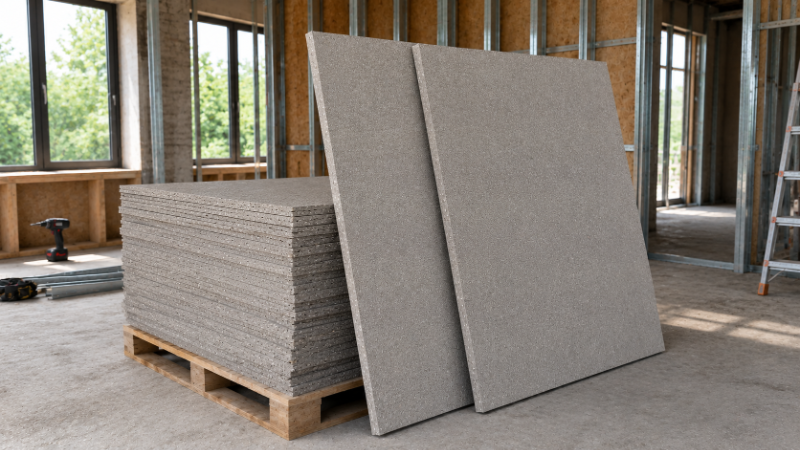
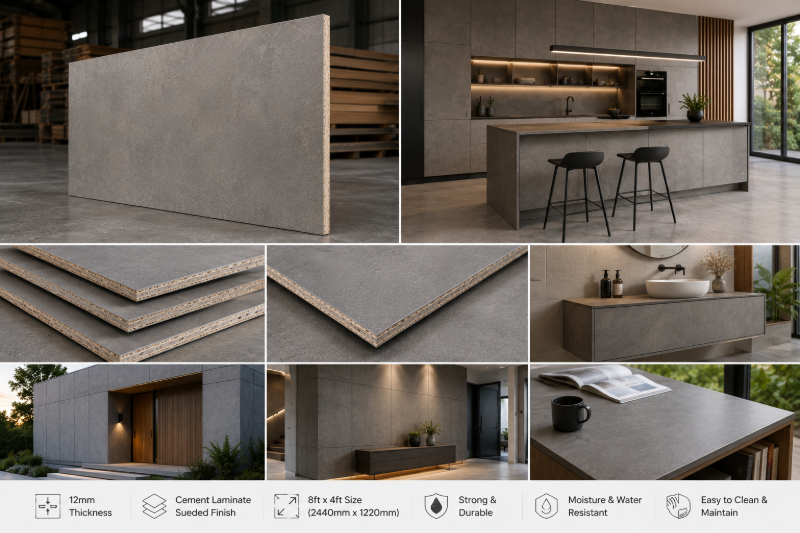
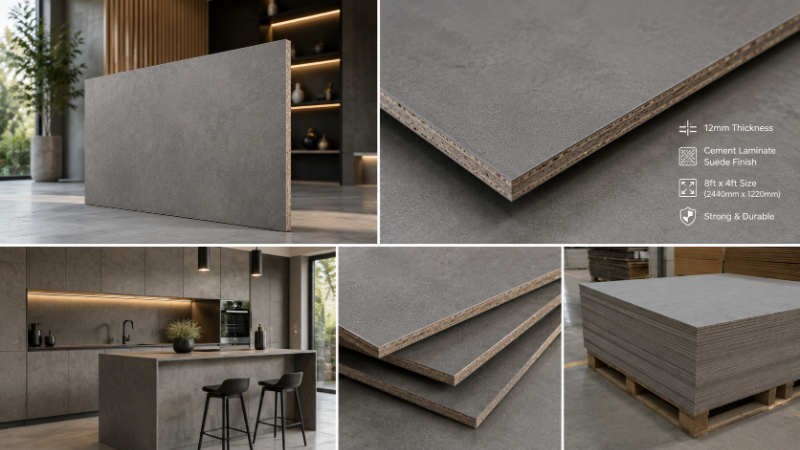
Cement bonded particle board is an engineered composite material manufactured by combining wood particles or fibers with a Portland cement binder. The Bison variant, particularly the grey finish (reference code 504918), represents a premium offering in this category. The 30mm thickness provides enhanced structural integrity and load-bearing capacity compared to thinner alternatives, making it ideal for demanding applications in Indian construction.
The manufacturing process involves mixing wood particles with cement and other additives, then pressing the mixture under high pressure to create a dense, durable panel. This process results in a material that combines the workability of wood products with the durability and fire resistance of cement./blog/13085-1-0-mm-twist-textile-laminate-sued-finish-8-ft-x-4-ft-495714
Key Physical Properties
The 30mm thickness Bison panel offers several important characteristics:
Density: Typically ranges from 1100-1400 kg/m³, providing excellent structural support
Moisture Resistance: Superior water absorption resistance compared to standard plywood, making it suitable for wet areas
Fire Rating: Non-combustible material with excellent fire resistance properties
Dimensional Stability: Minimal warping or swelling even in high-humidity environments
Durability: Can last 20+ years with proper installation and maintenance
Frequently asked
Standard Dimensions and Coverage
The 1220mm x 2440mm Format
The standard dimensions of 1220mm width by 2440mm length (approximately 4 feet by 8 feet) have become the industry standard for good reason. This size offers optimal coverage for most applications while remaining manageable for installation. A single panel covers approximately 2.98 square meters, making it easy to calculate material requirements for your projects.
For a typical 100 square meter wall application, you would require approximately 34 panels of this size, accounting for minimal waste during installation. This standardization also makes procurement easier when working with suppliers across major Indian cities like Mumbai, Delhi, Bangalore, and Hyderabad.
Thickness Considerations
The 30mm thickness is particularly significant for several reasons. Unlike thinner 12mm or 18mm variants, the 30mm option provides:
Enhanced load-bearing capacity for structural applications
Better sound insulation properties
Improved impact resistance
Greater versatility in both interior and exterior applications
Superior screw and fastener holding power
Applications in Indian Construction
Residential Projects
In residential construction across India, Bison cement bonded particle board has found numerous applications. The material is particularly valuable for:
Kitchen Cabinets and Countertops: The moisture resistance makes it ideal for kitchen environments where traditional plywood might deteriorate
Bathroom Partitions: Superior water resistance compared to alternatives, crucial in Indian climates with high humidity
Wall Cladding: Both interior and exterior applications, particularly in coastal regions where salt spray is a concern
Flooring Base: Excellent substrate for tile or wooden flooring installations
Commercial and Industrial Applications
Commercial projects benefit significantly from CBPB's durability and performance characteristics:
Office partitioning systems
Retail store fixtures and displays
Industrial equipment enclosures
Cold storage room construction
Laboratory and healthcare facility installations
Exterior Applications
The grey finish Bison panel (504918) is particularly suited for exterior applications, offering natural aesthetic appeal while maintaining functional superiority. Common uses include:
Facade cladding for modern architectural designs
Soffit and fascia boards
Pergola and shade structure construction
Outdoor kitchen and entertainment area construction
Cost Analysis for Indian Market
Pricing Structure
As of 2024, the pricing for 30mm thick Bison cement bonded particle board in India typically ranges from ₹2,500 to ₹3,500 per panel, depending on your location and supplier. Here's a breakdown by major Indian cities:
Mumbai and Western Region: ₹2,800-₹3,200 per panel
Delhi and Northern Region: ₹2,600-₹3,100 per panel
Bangalore and Southern Region: ₹2,500-₹3,000 per panel
Kolkata and Eastern Region: ₹2,700-₹3,300 per panel
For a 100 square meter project, material costs would range from approximately ₹85,000 to ₹1,19,000, excluding installation labor and additional materials like adhesives and fasteners.
Value Proposition
While cement bonded particle board may cost 20-30% more than standard plywood initially, the long-term value is superior. Consider these factors:
Extended lifespan reduces replacement costs
Minimal maintenance requirements save on upkeep expenses
Superior performance in humid Indian climate reduces repair costs
Better resale value for properties using quality materials
Installation and Handling Best Practices
Pre-Installation Preparation
Proper preparation ensures optimal performance of your Bison panels:
Acclimatization: Allow panels to acclimate for 48 hours at the installation site to adjust to local humidity and temperature
Storage: Store panels horizontally on a flat, level surface with adequate ventilation
Inspection: Check each panel for damage or defects before installation
Tools Preparation: Use carbide-tipped saw blades and drill bits for cutting and fastening
Cutting and Finishing
The 30mm thickness requires proper techniques for cutting:
Use a fine-toothed saw blade to minimize chipping
Cut with the finished side up to prevent splintering
Wear appropriate PPE including dust masks, as cement dust can be irritating
Allow cut edges to dry for 24 hours before painting or sealing
Sand edges with 120-150 grit sandpaper for smooth finishing
Fastening Recommendations
The dense nature of cement bonded particle board requires appropriate fastening:
Screws: Use corrosion-resistant screws (stainless steel or galvanized) with a minimum diameter of 3.5mm
Spacing: Install fasteners every 150-200mm along edges and 300mm in the field
Adhesives: Use cement-compatible adhesives like polyurethane or epoxy-based products
Nailing: While possible, screwing is preferred for superior holding power
Maintenance and Longevity
Routine Maintenance
Maintaining your Bison cement bonded particle board installations ensures maximum lifespan:
Cleaning: Regular cleaning with mild soap and water prevents dirt accumulation
Protective Coating: Apply appropriate sealers or paints every 3-5 years for exterior applications
Drainage: Ensure proper drainage around installations to prevent water pooling
Inspection: Conduct periodic inspections for any signs of damage or deterioration
Addressing Common Issues
Understanding potential issues helps you address them proactively:
Surface Staining: Use appropriate cleaners and sealers to prevent staining
Edge Swelling: Ensure proper sealing of cut edges to prevent moisture ingress
Fastener Corrosion: Use only corrosion-resistant fasteners to prevent rust and staining
Comparison with Alternative Materials
Versus Plywood
While plywood is more common in Indian construction, cement bonded particle board offers distinct advantages:
Superior moisture resistance (critical in Indian climate)
Better fire rating and non-combustibility
Longer lifespan in humid environments
Excellent dimensional stability
Better performance in coastal areas
Versus Particle Board
Standard particle board cannot match the performance of cement bonded variants:
CBPB offers superior moisture resistance
Better durability in harsh environmental conditions
Improved structural integrity and load-bearing capacity
Fire resistance properties
Versus Fiber Cement Sheets
While both are cement-based, particle board offers advantages in specific applications:
Better workability and easier installation
Superior insulation properties
More versatile for interior applications
Better screw and fastener retention
Environmental and Health Considerations
Sustainability Aspects
Bison cement bonded particle board incorporates recycled wood particles, making it an environmentally conscious choice:
Utilizes wood waste from other industries
Reduces demand for virgin timber
Portland cement binding is a well-established, recyclable material
Long lifespan reduces replacement frequency
Health and Safety
The grey finish Bison panel is free from formaldehyde and other harmful volatile organic compounds, making it safe for residential applications. During installation, standard construction safety practices apply, particularly regarding dust management.
Finding Quality Suppliers and Professionals
When sourcing Bison cement bonded particle board for your projects, it's essential to work with reputable suppliers and experienced installation professionals. AECORD, India's leading B2B2C marketplace for architecture, engineering, construction, and operations professionals, connects you with verified suppliers and contractors across major Indian cities. Whether you're in Mumbai, Delhi, Bangalore, or any other major metropolitan area, AECORD helps you find professionals with proven expertise in cement bonded particle board installations.
Through AECORD's platform, you can access detailed profiles of suppliers, compare pricing, review past projects, and connect directly with professionals who understand the nuances of working with these materials in the Indian climate.
Regulatory Compliance in India
Building Code Compliance
Ensure your installations comply with relevant Indian standards:
IS 12006-1: Plywood for general purposes - specifications
IS 13986: Wood-based panels - Specification for particle boards
National Building Code (NBC): Fire safety and material specifications
Local Municipal Building Bylaws: Specific to your city and project type
Conclusion
The 30mm thick Bison cement bonded particle board in the standard 1220mm x 2440mm format represents a premium choice for discerning construction professionals across India. Its superior moisture resistance, fire performance, dimensional stability, and durability make it particularly well-suited to the Indian climate and construction requirements.
Whether you're working on residential, commercial, or industrial projects, understanding the proper selection, installation, and maintenance of these panels is crucial for project success. The investment in quality materials and professional installation pays dividends in longevity and performance.
To find experienced professionals for your cement bonded particle board projects, explore AECORD's extensive network of verified suppliers, contractors, and installation specialists across India. Connect with experts who understand both the technical requirements and the practical realities of working with premium building materials in the Indian construction market.
Frequently Asked Questions
What is cement bonded particle board and how is it different from plywood?
Cement bonded particle board (CBPB) is an engineered composite made by combining wood particles with Portland cement binder, offering superior moisture resistance and fire rating compared to plywood. Unlike plywood which can warp in humid conditions, CBPB maintains dimensional stability and can last 20+ years, making it ideal for wet areas and demanding construction applications in India.
How many 30mm Bison cement bonded particle board panels do I need for 100 square meters?
For a 100 square meter wall application, you would need approximately 34 panels of the standard 1220mm x 2440mm size, as each panel covers about 2.98 square meters. This calculation accounts for minimal waste during installation and helps with accurate project budgeting.
Why is 30mm thickness better than thinner cement bonded particle board options?
The 30mm thickness provides enhanced load-bearing capacity, better sound insulation, improved impact resistance, and superior fastener holding power compared to 12mm or 18mm variants. This makes it more versatile for both interior and exterior applications while offering greater structural integrity for demanding construction projects.
Is Bison cement bonded particle board suitable for kitchen and bathroom applications?
Yes, Bison cement bonded particle board is excellent for kitchens and bathrooms due to its superior moisture resistance and water absorption properties compared to standard plywood. Its non-combustible nature and dimensional stability in high-humidity environments make it ideal for wet areas where traditional materials might deteriorate.
What is the expected lifespan of 30mm Bison cement bonded particle board?
With proper installation and maintenance, 30mm Bison cement bonded particle board can last 20+ years, thanks to its high density (1100-1400 kg/m³), excellent fire resistance, and superior durability compared to conventional building materials. Its dimensional stability ensures it maintains structural integrity throughout its service life.