

Understanding 14mm Thickness Bison Panel Cement Bonded Particle Board: A Comprehensive Guide for Indian AECO Professionals
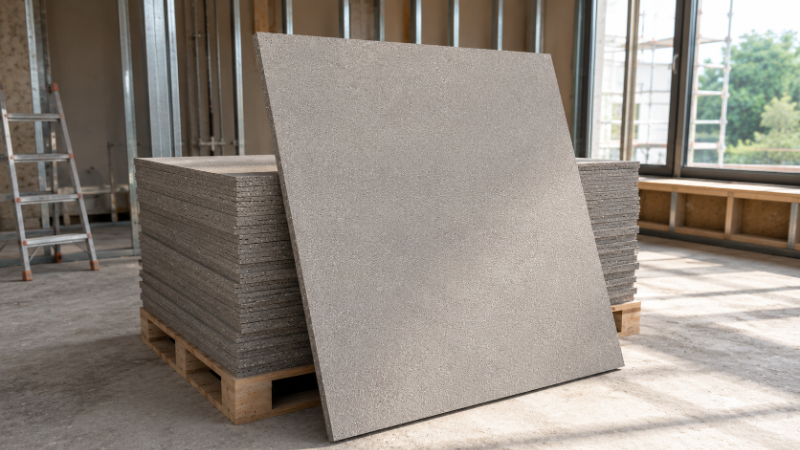
Cement bonded particle board (CBPB) has emerged as one of the most versatile and reliable building materials in the Indian construction industry. Among the various specifications available, the 14mm thickness Bison panel in 1220mm x 2440mm dimensions stands out as a particularly popular choice for architects, engineers, and construction professionals across India. This comprehensive guide will help you understand this material's properties, applications, advantages, and how to source it effectively through platforms like AECORD./blog/13085-1-0-mm-twist-textile-laminate-pearl-leather-finish-8-ft-x-4-ft-495371
Build cost · Bengaluru, May 2026
What is Cement Bonded Particle Board?
Cement bonded particle board is an engineered composite material made from wood particles bonded together with Portland cement. Unlike traditional plywood or MDF, CBPB offers superior durability, moisture resistance, and fire performance—making it an ideal choice for various construction applications in India's diverse climate zones./blog/13085-1-0-mm-twist-textile-laminate-sued-finish-8-ft-x-4-ft-495714
Composition and Manufacturing Process
The manufacturing of cement bonded particle board involves several critical steps. Wood particles are mixed with Portland cement, silica fume, and water to create a homogeneous slurry. This mixture is then pressed into sheets under controlled temperature and humidity conditions. The Bison panel brand, manufactured by Binderholz, represents one of the highest quality standards in this category.
The 14mm thickness specification provides an excellent balance between structural strength and material economy, making it particularly suitable for Indian construction projects where cost-effectiveness is crucial.
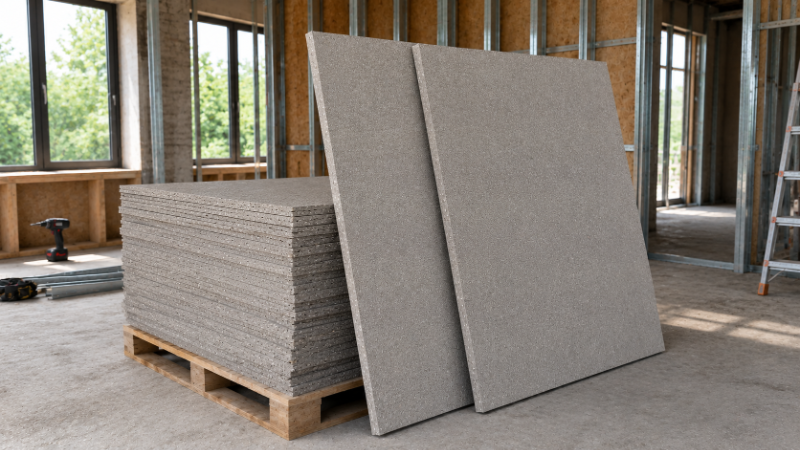
Standard Dimensions: 1220mm x 2440mm
The standard dimensions of 1220mm x 2440mm (approximately 4ft x 8ft) are internationally recognized and widely adopted in India. These dimensions offer:
Optimal coverage area of 2.97 square meters per sheet
Easy handling and transportation logistics
Minimal wastage during installation
Compatibility with standard construction practices across Indian cities like Bangalore, Mumbai, Delhi, and Pune
Frequently asked
Key Properties of 14mm Bison Cement Bonded Particle Board
Physical Properties
The 14mm thickness Bison panel (Grey 504916) offers impressive physical characteristics that make it suitable for demanding applications:
Density: Approximately 1.3 to 1.4 g/cm³, providing excellent structural integrity
Modulus of Elasticity: High rigidity ensures minimal deflection under load
Bending Strength: Typically exceeds 12 MPa, suitable for load-bearing applications
Thickness Tolerance: ±0.5mm, ensuring consistent quality across all sheets
Moisture and Fire Resistance
One of the primary advantages of cement bonded particle board over traditional wood-based products is its exceptional moisture resistance. The cement matrix prevents water absorption, making it ideal for:
Wet areas and bathrooms
Exterior applications and weather-exposed surfaces
Kitchen backsplashes and countertops
Regions with high humidity, such as coastal cities (Mumbai, Kochi, Goa)
Additionally, CBPB is non-combustible and classified as Euroclass A2-s1, d0, providing superior fire protection compared to conventional particle boards. This makes it an excellent choice for commercial buildings, hospitals, and educational institutions in India where fire safety regulations are stringent.
Applications of 14mm Bison Cement Bonded Particle Board in Indian Construction
Interior Wall Panelling
The 14mm thickness is ideal for interior wall applications, providing structural stability while maintaining ease of installation. Architects across Indian metropolitan areas use these panels for:
Partition walls in office spaces
Accent walls and feature panels
Acoustic wall treatments
Durable finishes in high-traffic areas
Flooring and Underlay
When properly installed with appropriate moisture barriers, 14mm CBPB serves as an excellent subfloor material. The thickness provides sufficient strength to support various flooring finishes including ceramic tiles, laminate, and wooden flooring. This application is particularly popular in residential projects across Bangalore, Hyderabad, and NCR regions.
Exterior Cladding and Facade Systems
The moisture and weather resistance of Bison cement bonded particle board make it suitable for external facade applications. When combined with appropriate protective coatings, these panels can withstand India's monsoon seasons and intense UV exposure, making them cost-effective alternatives to expensive cladding materials.
Wet Area Applications
Bathrooms, kitchens, and laundry areas require materials that won't deteriorate with constant moisture exposure. The 14mm Bison panel excels in these applications:
Shower enclosures and wet room walls
Kitchen backsplashes
Bathroom vanity bases
Swimming pool surrounds
Industrial and Commercial Applications
Beyond residential construction, these panels find extensive use in industrial settings:
Machine enclosures and protective barriers
Cleanroom construction
Food processing facility walls
Chemical storage area linings
Installation and Handling Guidelines
Storage and Acclimatization
Proper handling begins before installation. Cement bonded particle boards should be:
Stored horizontally on level, dry surfaces
Protected from direct moisture exposure and rain
Allowed to acclimatize to site conditions for at least 48 hours before installation
Kept in well-ventilated areas to prevent moisture accumulation
Installation Best Practices
When installing 14mm Bison panels, follow these professional guidelines:
Framing: Use timber or metal studs spaced at 400-600mm centers for optimal support
Fastening: Use corrosion-resistant screws or nails at 150-200mm intervals around edges and 300mm on intermediate supports
Joint Treatment: Leave 3-5mm expansion gaps between sheets and fill with flexible sealant
Moisture Barriers: Install appropriate vapor barriers on the warm side of exterior walls
Surface Preparation: Sand joints lightly and apply primer before painting or finishing
Cutting and Shaping
Unlike MDF or plywood, cement bonded particle board requires specific tools and techniques:
Use circular saws with carbide-tipped blades for clean cuts
Wear appropriate PPE, including dust masks, as cement dust is harmful when inhaled
Cut on the finished side to minimize chipping
Use water-based cutting techniques to reduce dust generation
Cost Analysis and Market Pricing in India
Understanding the cost structure of cement bonded particle board helps in project budgeting. As of 2024, the pricing in India varies based on several factors:
Base Material Cost
The 14mm thickness Bison panel in 1220mm x 2440mm dimensions typically costs between ₹1,200 to ₹1,800 per sheet depending on:
Location (metros like Delhi and Mumbai may have slightly higher prices)
Bulk order quantities (larger orders typically receive 5-10% discounts)
Supplier and distribution network
Current raw material costs and import duties
Total Project Cost Considerations
When budgeting for a project using AECORD to source materials, factor in:
Material cost: ₹1,200-1,800 per sheet
Installation labor: ₹50-100 per square meter depending on complexity
Finishing materials (primer, paint, sealants): ₹200-400 per square meter
Additional framing and support structures: Variable based on application
Comparing Bison Cement Bonded Particle Board with Alternatives
vs. Traditional Plywood
While plywood is widely used in India, cement bonded particle board offers superior moisture resistance and fire performance at comparable or lower costs. CBPB doesn't require the same level of protective coatings and maintains its integrity in wet environments where plywood would deteriorate.
vs. MDF and HDF
Medium Density Fiberboard (MDF) and High Density Fiberboard (HDF) are popular for interior finishes but lack moisture resistance. They are unsuitable for wet areas and exterior applications where 14mm Bison panels excel. CBPB's durability in harsh conditions makes it a superior long-term investment.
vs. Gypsum Board
Gypsum boards are lighter and easier to install but offer inferior moisture and impact resistance. For applications requiring durability and moisture resistance, cement bonded particle board provides better performance, especially in Indian climate conditions with significant seasonal variations.
Regulatory Compliance and Standards
In India, cement bonded particle boards must comply with several standards:
IS 12823:2018 – Indian Standard for Cement Bonded Particle Boards
EN 634-1 and EN 634-2 – European standards that many Indian manufacturers follow
Fire Safety: Compliance with National Building Code (NBC) of India requirements
Environmental Certifications: FSC or PEFC certification for sustainable sourcing
When sourcing materials through AECORD, ensure that suppliers provide proper documentation confirming compliance with these standards.
Sustainability and Environmental Considerations
Cement bonded particle board is increasingly recognized as a sustainable building material:
Uses recycled and low-grade wood particles that would otherwise be waste
Durability means longer service life and reduced replacement frequency
Non-toxic and doesn't off-gas harmful chemicals like some alternatives
Fully recyclable at end of life
Lower embodied carbon compared to virgin wood products
For environmentally conscious projects in India, specifying certified sustainable CBPB contributes to green building certifications like IGBC (Indian Green Building Council) ratings.
Finding Quality Suppliers Through AECORD
AECORD, India's leading B2B2C marketplace for AECO professionals, connects architects, engineers, and contractors with verified suppliers of high-quality building materials, including premium cement bonded particle boards like the Bison 14mm panels.
Advantages of Sourcing Through AECORD
Access to verified suppliers across major Indian cities
Transparent pricing and bulk discount structures
Quality assurance and compliance documentation
Reliable delivery and logistics support
Professional networking with other AECO professionals
Reviews and ratings from previous projects
Tips for Sourcing Materials on AECORD
When searching for 14mm Bison cement bonded particle board on AECORD:
Specify exact dimensions and thickness requirements
Request samples before placing bulk orders
Compare pricing across multiple suppliers
Verify certifications and compliance documentation
Confirm delivery timelines and logistics
Check supplier ratings and past project reviews
Common Mistakes to Avoid
When working with cement bonded particle board, professionals often make these costly errors:
Inadequate moisture barriers: Always install proper vapor barriers in external applications
Insufficient fastening: Use recommended fastening schedules to prevent panel movement
Improper joint treatment: Sealed joints prevent moisture infiltration and material movement
Ignoring dust safety: Cutting cement board generates harmful dust; use appropriate PPE
Skipping primer: Always apply primer before painting for best adhesion and longevity
Incorrect storage: Improper storage can damage panels before installation
Future Trends in Cement Bonded Particle Board Applications
The Indian construction industry is witnessing growing adoption of cement bonded particle boards due to:
Increasing focus on fire safety and building regulations
Growing demand for sustainable building materials
Rising awareness of moisture-related structural damage
Expansion of wet room and bathroom renovations in urban areas
Industrial sector growth requiring durable interior solutions
Architects and engineers are increasingly specifying CBPB for projects in Tier 1 and Tier 2 cities across India, recognizing its superior performance characteristics and long-term cost benefits.
Conclusion
The 14mm thickness Bison cement bonded particle board in 1220mm x 2440mm dimensions represents an excellent choice for Indian AECO professionals seeking durable, moisture-resistant, and fire-safe building materials. Its versatility across residential, commercial, and industrial applications, combined with competitive pricing and environmental benefits, makes it a smart specification for modern construction projects.
Whether you're planning interior partitions, wet area applications, or exterior cladding systems, this material delivers reliable performance in India's varied climate conditions. The key to successful projects lies in proper selection, correct installation, and sourcing from verified suppliers who maintain quality standards.
Ready to find quality suppliers of cement bonded particle board for your next project? Visit AECORD today to connect with verified suppliers across India. Browse through our extensive network of AECO professionals, compare pricing and specifications, and source premium building materials with confidence. Whether you're in Bangalore, Mumbai, Delhi, or any other Indian city, AECORD makes it easy to find the right materials and professionals for your construction needs.
Frequently Asked Questions
What is cement bonded particle board and how is it different from plywood?
Cement bonded particle board (CBPB) is an engineered composite made from wood particles bonded with Portland cement, offering superior durability, moisture resistance, and fire performance compared to traditional plywood or MDF. Unlike plywood, CBPB is non-combustible and classified as Euroclass A2-s1, d0, making it ideal for wet areas and fire-sensitive applications in Indian construction.
What are the standard dimensions and coverage area of 14mm Bison cement bonded particle board?
The standard dimensions are 1220mm x 2440mm (approximately 4ft x 8ft), which provides an optimal coverage area of 2.97 square meters per sheet. These internationally recognized dimensions ensure easy handling, minimal wastage, and compatibility with standard construction practices across Indian cities.
Is cement bonded particle board suitable for wet areas like bathrooms and kitchens?
Yes, 14mm Bison cement bonded particle board is excellent for wet areas because the cement matrix prevents water absorption, making it ideal for bathrooms, kitchen backsplashes, countertops, and exterior applications. This makes it particularly suitable for high-humidity coastal regions like Mumbai, Kochi, and Goa.
What is the density and structural strength of 14mm Bison cement bonded particle board?
The 14mm Bison panel has a density of approximately 1.3 to 1.4 g/cm³ with bending strength typically exceeding 12 MPa, providing excellent structural integrity and minimal deflection under load. These properties make it suitable for load-bearing applications and demanding construction projects.
Why is 14mm thickness preferred over other thickness options in Indian construction?
The 14mm thickness provides an excellent balance between structural strength and material economy, making it cost-effective for Indian construction projects while maintaining superior durability and performance. Its ±0.5mm thickness tolerance ensures consistent quality across all sheets for reliable installation.