


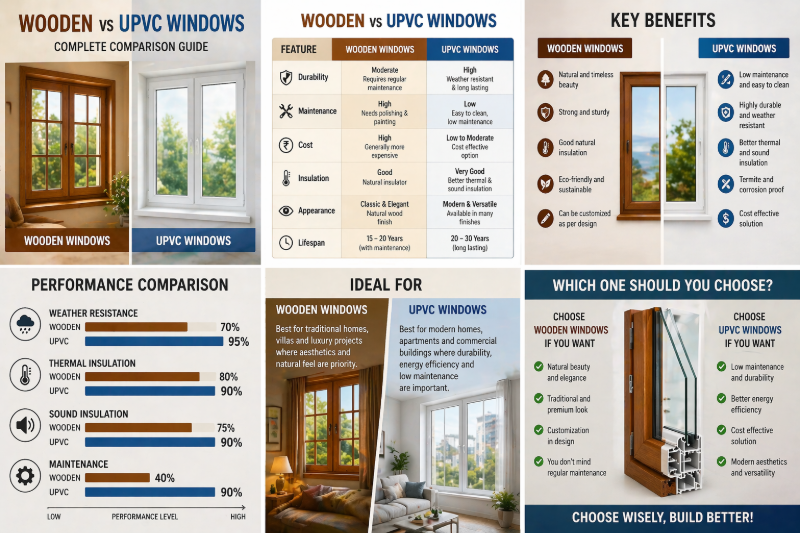
Choosing between wooden and UPVC windows is one of the most important decisions homeowners and builders make during construction or renovation projects in India. Both materials have distinct advantages and disadvantages that can significantly impact your home's aesthetics, durability, maintenance requirements, and long-term costs. This comprehensive guide will help you understand the key differences and make an informed decision based on your specific needs and climate conditions.
Understanding Wooden Windows
Wooden windows have been a traditional choice in India for centuries, offering timeless beauty and natural appeal. They are crafted from various types of wood, including teak, sal, sheesham, and pine, each offering different durability levels and aesthetic qualities.
Build cost · Bengaluru, May 2026
Advantages of Wooden Windows
Aesthetic Appeal: Wooden windows provide a warm, natural look that complements both traditional and contemporary architectural styles. They can be customized with various finishes, stains, and paint colors to match your home's design.
Excellent Insulation: Wood is a natural insulator with low thermal conductivity, helping maintain indoor temperatures and reducing energy consumption. This is particularly beneficial in cooler climates like Himachal Pradesh, Uttarakhand, and Kashmir.
Sound Insulation: Wooden frames naturally dampen external noise, making them ideal for homes in busy urban areas like Mumbai, Delhi, and Bangalore.
Environmental Sustainability: When sourced responsibly, wooden windows are biodegradable and environmentally friendly. They have a lower carbon footprint compared to synthetic alternatives.
Customization Options: Wooden windows can be easily modified, repaired, and refinished to match changing design preferences over time.
Cost-Effective Initially: The upfront cost of wooden windows is often lower than UPVC alternatives, making them attractive for budget-conscious homeowners.
Disadvantages of Wooden Windows
High Maintenance Requirements: Wooden windows require regular painting, varnishing, and treatment to prevent rot, termite infestation, and weather damage. This maintenance is essential, especially in humid regions like Kerala, Goa, and coastal areas.
Susceptibility to Moisture and Pests: In India's tropical and subtropical climates, wood is vulnerable to moisture absorption, which can lead to swelling, warping, and fungal growth. Termites are a significant concern in most Indian cities.
Limited Lifespan: Even with proper maintenance, wooden windows typically last 15-20 years before requiring replacement, particularly in high-humidity environments.
Higher Long-Term Costs: While initial costs are low, the cumulative expenses of regular maintenance, repainting, and pest control treatments can exceed the cost of UPVC windows over time.
Weather Sensitivity: Wooden frames expand and contract with temperature and humidity changes, potentially affecting window operation and seal integrity.
Understanding UPVC Windows
UPVC (Unplasticized Polyvinyl Chloride) windows are a modern alternative that has gained significant popularity in India over the past two decades. They are manufactured from rigid plastic material that doesn't require the reinforcement of plasticizers.
Frequently asked
Advantages of UPVC Windows
Low Maintenance: UPVC windows require minimal maintenance—just occasional cleaning with mild soap and water. They don't need painting, varnishing, or special treatments, making them ideal for busy homeowners.
Excellent Durability: UPVC windows are highly resistant to moisture, rot, termites, and fungal growth. They can last 30-40 years or more with proper care, making them a long-term investment.
Weather Resistance: UPVC material is engineered to withstand extreme weather conditions, UV radiation, and temperature fluctuations common in Indian climates, from the scorching heat of Delhi and Rajasthan to the monsoons of the Western Ghats.
Energy Efficiency: Modern UPVC windows with double glazing and low-emissivity coatings provide excellent thermal insulation, helping reduce air conditioning and heating costs.
Sound Insulation: UPVC windows with double or triple glazing offer superior sound dampening, making them excellent for urban environments.
Variety of Designs: UPVC windows come in numerous colors, finishes, and styles that can mimic the appearance of wooden frames while offering modern functionality.
Security Features: UPVC windows can be equipped with advanced locking mechanisms and reinforced frames, providing better security for your home.
Disadvantages of UPVC Windows
Higher Initial Cost: UPVC windows typically cost 40-60% more than wooden windows initially. A standard UPVC window in Indian cities can cost between ₹800-₹1,500 per square foot, compared to ₹500-₹900 for wooden windows.
Environmental Concerns: UPVC is a plastic material derived from petroleum, raising environmental concerns. While recyclable, the recycling infrastructure in India is still developing.
Limited Aesthetic Warmth: Some homeowners feel UPVC windows lack the natural warmth and character of wooden frames, though modern designs have improved significantly.
Thermal Expansion: UPVC can expand and contract with temperature changes, though less dramatically than wood. This requires proper installation with adequate expansion gaps.
Disposal Issues: At the end of their life, UPVC windows are difficult to dispose of responsibly, contributing to landfill waste.
Climate Considerations for Indian Regions
Tropical and Coastal Regions
In cities like Mumbai, Kolkata, Chennai, and Kochi, where humidity levels are consistently high and salt spray from the ocean is a concern, UPVC windows are the superior choice. The moisture resistance of UPVC prevents the wood rot and termite damage that plague wooden windows in these regions. Wooden windows in coastal areas may require replacement every 8-10 years, while UPVC windows can easily last 30+ years with minimal maintenance.
Semi-Arid and Arid Regions
In cities like Delhi, Jaipur, and Ahmedabad, where temperature fluctuations are extreme and humidity is low, both options can perform reasonably well. However, UPVC's superior thermal efficiency makes it more suitable for managing the intense heat and cold variations. Wooden windows can work in these regions if high-quality wood is used and proper maintenance is performed, but UPVC remains the more practical choice.
Temperate Regions
In hill stations like Shimla, Mussoorie, and Ooty, where temperatures are moderate and humidity is relatively low, wooden windows can perform adequately. However, the winter moisture and occasional frost still make UPVC a more durable option. Many heritage properties in these regions maintain wooden windows for aesthetic reasons, but modern constructions increasingly prefer UPVC for longevity.

Cost Comparison: Initial and Long-Term
Initial Installation Costs
For a typical residential window (1.2m x 1.2m):
Wooden Windows: ₹4,500-₹8,000 per window, depending on wood quality and design complexity
UPVC Windows: ₹7,000-₹12,000 per window, with double glazing adding ₹2,000-₹4,000 extra
Long-Term Cost Analysis (Over 30 Years)
When calculating the total cost of ownership, including maintenance and replacement:
Wooden Windows: Initial cost + maintenance (₹500-₹1,500 per window annually) + replacement every 15-20 years = approximately ₹40,000-₹60,000 total cost per window over 30 years
UPVC Windows: Higher initial cost but minimal maintenance (₹200-₹300 annually) and no replacement needed = approximately ₹25,000-₹35,000 total cost per window over 30 years
This analysis demonstrates that UPVC windows offer better value over the long term, despite higher upfront costs.
Maintenance Requirements Comparison
Wooden Window Maintenance
Maintaining wooden windows requires consistent effort and expense:
Repainting or varnishing every 2-3 years (₹200-₹500 per window)
Regular termite treatment and inspection
Caulking and sealing to prevent water infiltration
Checking for rot, warping, and structural damage
Replacing weatherstripping as needed
UPVC Window Maintenance
UPVC windows require minimal maintenance:
Occasional cleaning with mild soap and water
Annual inspection of locks and hinges
Lubrication of moving parts with silicone-based lubricants
Checking and replacing weatherstripping if necessary (rare)
Environmental Impact and Sustainability
Both materials have environmental considerations worth evaluating:
Wooden Windows
Wooden windows are renewable and biodegradable, but their sustainability depends on responsible forestry practices. In India, where deforestation is a concern, the sourcing of wood for window frames should be verified. Look for wood certified by the Forest Stewardship Council (FSC) to ensure sustainable harvesting. Additionally, the regular maintenance of wooden windows requires paints and varnishes that may contain volatile organic compounds (VOCs), which can be harmful to indoor air quality.
UPVC Windows
UPVC is a petroleum-derived plastic with a higher environmental footprint in manufacturing. However, UPVC windows' longevity means fewer replacements are needed over time, potentially offsetting the initial environmental cost. The recycling infrastructure for UPVC in India is developing, with some manufacturers now offering take-back programs. When UPVC windows do reach the end of their life, they should be recycled through certified facilities rather than sent to landfills.
Finding the Right Window Solution on AECORD
Making the decision between wooden and UPVC windows can be challenging, and it's often helpful to consult with experienced professionals. AECORD, India's premier B2B2C marketplace for AECO professionals, connects you with qualified window manufacturers, architects, and contractors who can provide expert guidance tailored to your specific needs and location.
Whether you're looking for traditional wooden windows that complement a heritage property or modern UPVC windows that offer superior performance and minimal maintenance, AECORD helps you find verified professionals who can deliver quality solutions. You can compare options, review portfolios, and connect with experts who understand the unique challenges of different Indian climates and building codes.
Making Your Decision
Choose Wooden Windows If:
You live in a temperate, low-humidity climate
You value traditional aesthetics and natural materials
You have the budget and time for regular maintenance
You're building a heritage or period-style property
Your initial budget is limited
Choose UPVC Windows If:
You live in a humid, tropical, or coastal region
You prefer low-maintenance solutions
You want long-term durability and cost-effectiveness
You're building a modern residential or commercial property
Energy efficiency is a priority
You want superior security and weather resistance
Conclusion
The choice between wooden and UPVC windows depends on your climate, budget, lifestyle, and aesthetic preferences. While wooden windows offer timeless beauty and initial cost savings, UPVC windows provide superior durability, low maintenance, and better long-term value in most Indian climates. For homeowners in humid, coastal, or extreme weather regions, UPVC is the more practical choice. For those in temperate areas with a commitment to regular maintenance, wooden windows can still be viable.
Whatever you decide, ensure you source your windows from reputable manufacturers and installers. Visit AECORD to connect with trusted professionals who can help you select and install the perfect windows for your home, ensuring quality, durability, and satisfaction for years to come.